You went looking for the Walls.io free plan before committing to anything, and it is not there anymore. A 14 day trial took its place. Walls.io also split into three separately priced products in 2026: one for websites, one for digital signage, and one for events.
That change matters more than it sounds. The Walls.io figure quoted across every roundup is usually the events price. An Event Pass starts at $250 for 30 days, covering five sources and up to 500 live viewers. If you only want a feed in your website footer, you have been measuring against a product built for a conference hall.
So the search for a Walls.io alternative starts somewhere different than it did last year.
Main differentiator: Curator still has a free plan, and paid plans start at $25 per month. If you want to try it before reading any further, sign up today.
Here is how the options line up.
Curator | Walls.io for Websites | Walls.io Event Pass | |
|---|---|---|---|
Free option | Free plan, 3 sources, 2,000 views a month | No free plan, 14 day trial | No free plan, 14 day trial |
Entry paid price | $25 a month (Pro) | Confirm live at walls.io/pricing/websites | From $250 for 30 days |
Sources included | 5 on Pro, 15 on Business | 10 on Professional, 20 on Premium | 5 |
Refresh rate | 24 hrs free, 60 mins Pro, 15 mins Business | Every 15 mins | Real time |
Vendor branding | Small link on free, removed from $25 | Not on paid plans | Not on paid plans |
Best fit | Website feeds on a small to midsize budget | Always on website feeds, enterprise procurement | A single event, up to 500 viewers |
What to look for in a Walls.io alternative
Before you compare a single price, work out which use case you are buying for. A feed in your website footer and a live wall at a conference look almost identical in a screenshot. They need different refresh rates, different moderation, and very different budgets. Walls.io now forces that decision at the pricing page. Answering it for yourself first is what tells you whether a $250 quote is reasonable or absurd for your situation.
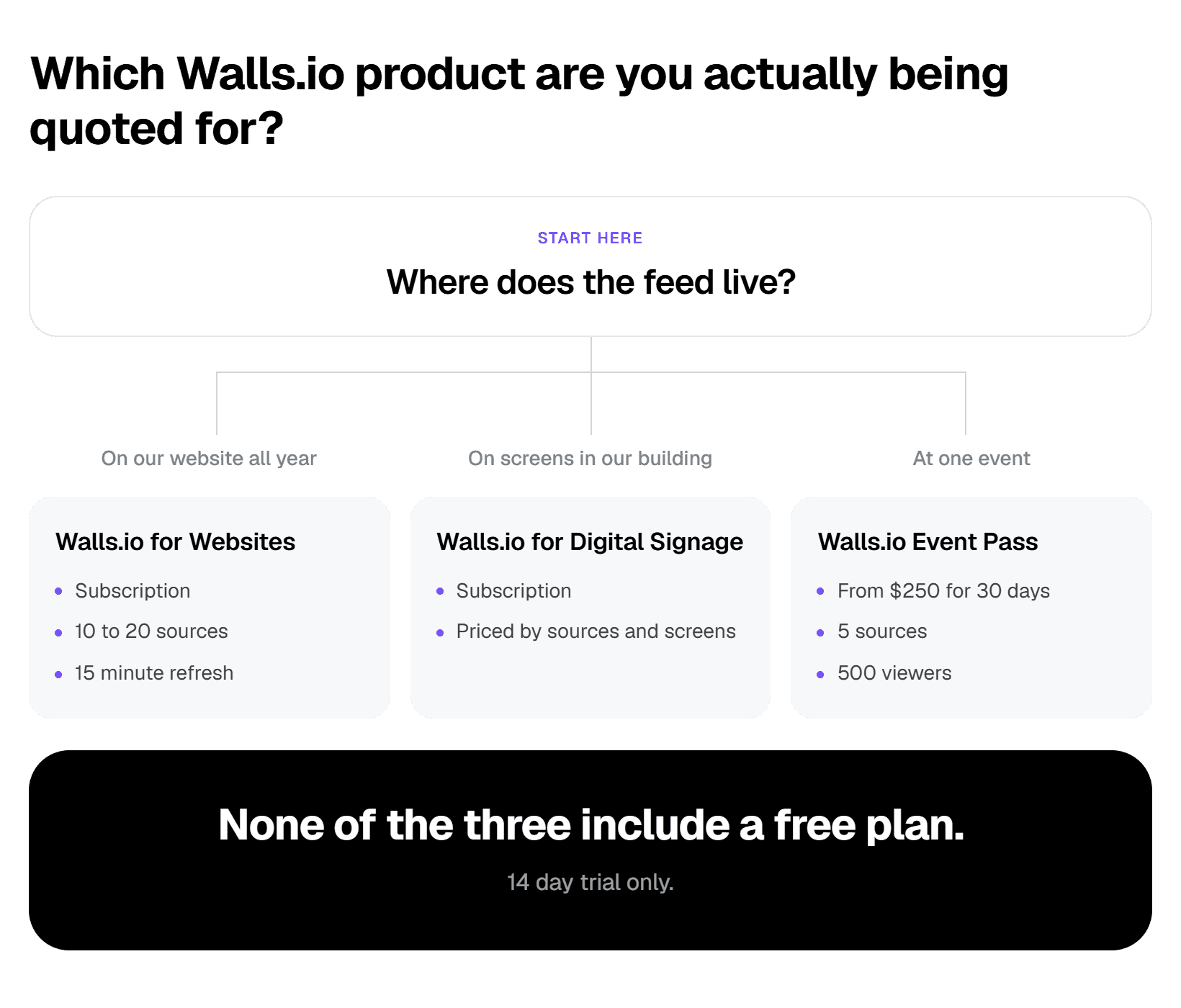
I always ask one question before looking at any pricing page. Is this feed going on a website, or on a screen at an event? The answer changes which tools are even worth comparing.
There are some important features that you want to vet for when checking out a Walls.io competitor. Social media aggregators are fairly simple pieces of software, but even still there are important features to look out for.
Ability to remove the company's branding (or the company should have unnoticeable branding)
Add posts from different social media platforms
Use different hashtags to aggregate posts in the same feed
The right number of monthly page views you need
Post moderation rules (such as automatically removing profanity)
Feed design options and customizations
Integrates with the sources you want to pull content from
Depending on your needs, you might also want to vet for more advanced features like user management, post editing and adding, as well as feed analytics.
Top Walls.io alternatives
Take a look at the top alternatives and choose the best fit for you.
1. Curator
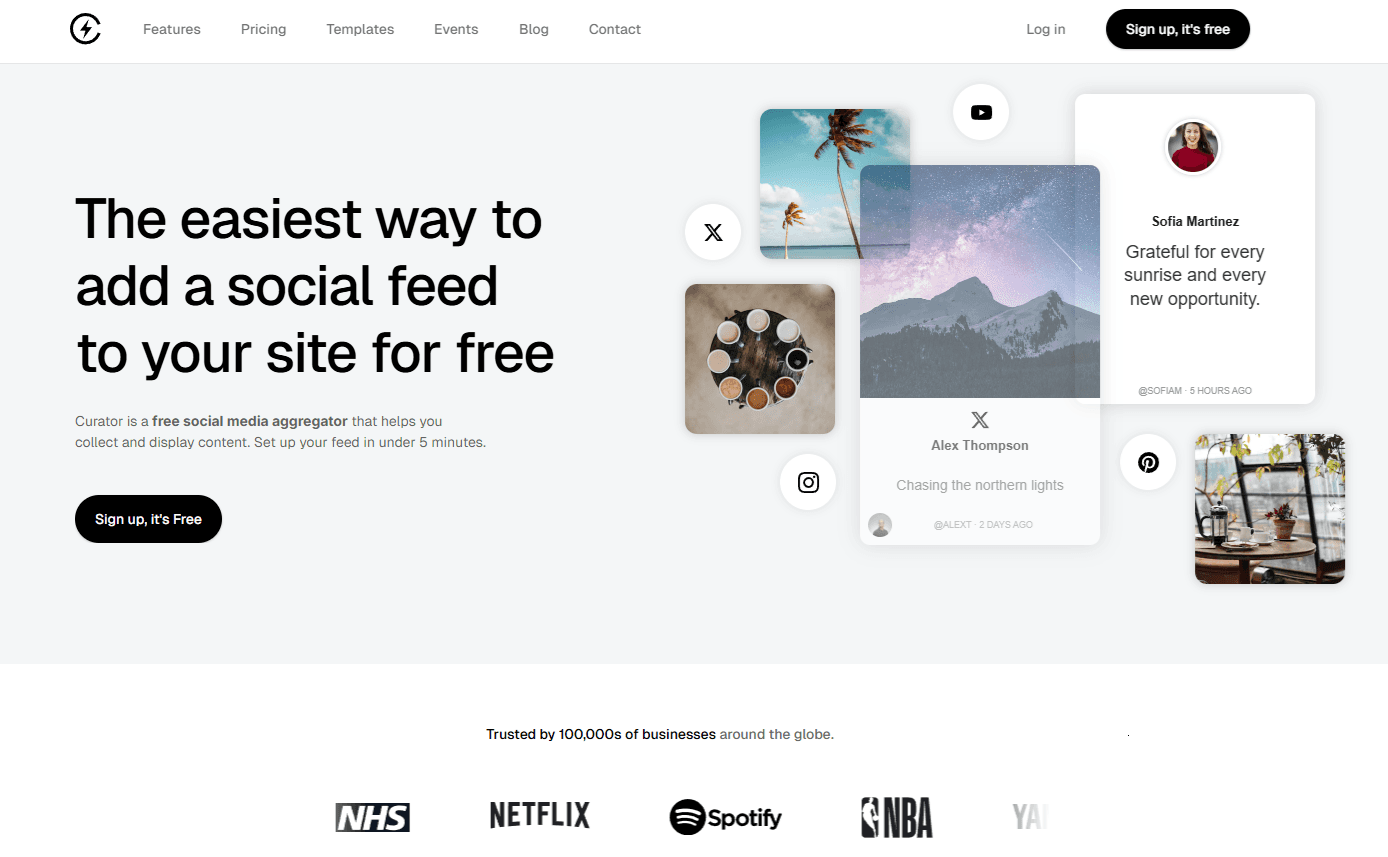
Curator is a streamlined social media aggregator that helps brands, marketers, and developers collect and display content from multiple platforms into a beautifully curated feed. Designed for websites, events, and digital displays, it supports everything from automatic content approval to custom CSS styling—making it a favorite for businesses that need high design flexibility and precise content control.
Core features
Aggregates content from Instagram, TikTok, Twitter/X, Facebook, LinkedIn, YouTube, and more
Auto-moderation and manual approval workflows
No-code editor and full CSS customization
Embed anywhere: websites, apps, signage, and more
REST API access for developers
Google Analytics and other third-party integrations
Pros and cons
Curator strikes a strong balance between ease of use and flexibility. It suits teams who want deep content control and a clean, ad free display. The free tier is genuinely usable, though it carries a small Powered by Curator link at the bottom of the feed. Removing that link starts on the $25 plan.
Pricing
Free covers three sources and 2,000 monthly views. Pro is $25 a month, Business is $59, and Enterprise is priced on request. Rights Management and Shoppable Posts are add-ons. Full detail lives on the pricing page.
Ratings
5.0 stars on G2
2. SnapWidget
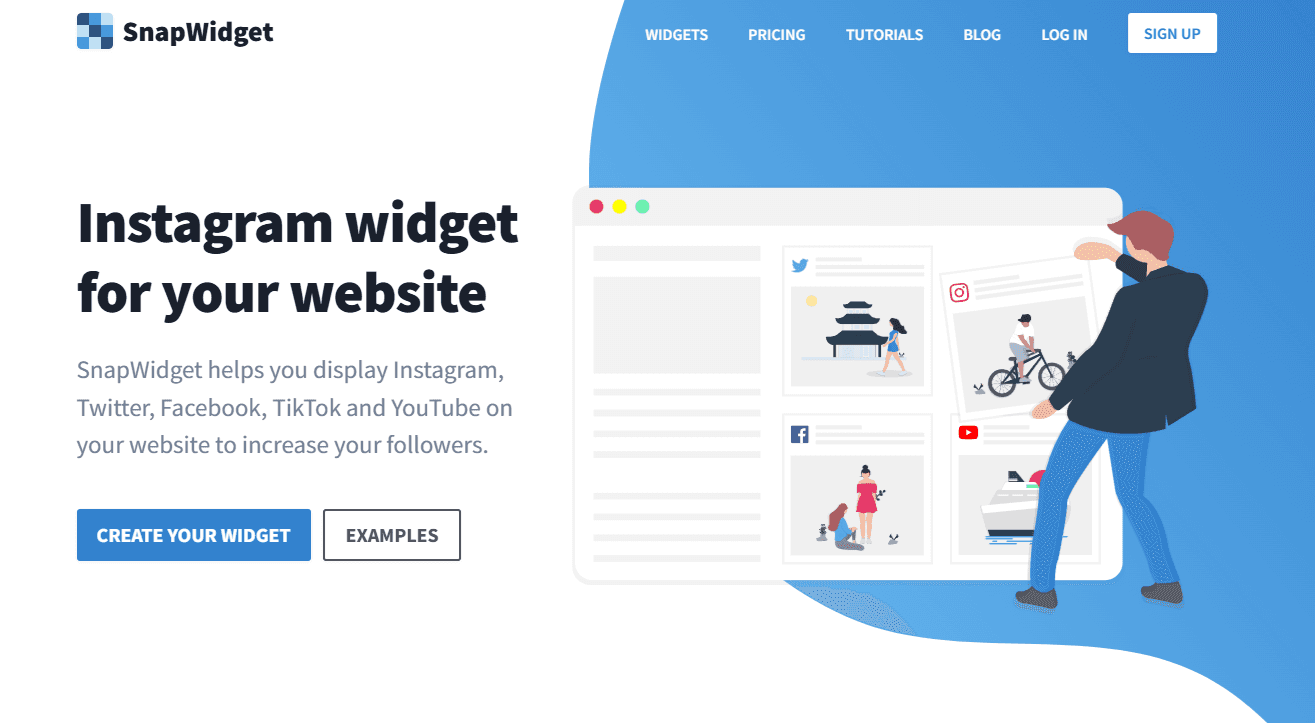
SnapWidget is a lightweight tool for embedding social media feeds, especially Instagram, TikTok, Facebook, Twitter, and YouTube, directly on your website. It's built for visual brands that want grids, carousels, slideshows, or even map-style displays with minimal setup.
Core features
Embeds for Instagram, TikTok, YouTube, Facebook, and Twitter
Multiple layouts: grids, carousels, slideshows, maps
Automatic updates (as frequent as every 5 minutes)
Hashtag widgets on paid plans
Pros and cons
Affordable and beginner-friendly, SnapWidget makes it easy to showcase visual content. Still, its limited moderation and filtering fall short compared to Curator.io, making it less ideal for campaigns needing strong brand control. Plus, the free plan displays SnapWidget branding, which can feel unpolished.
Pricing
SnapWidget starts at $8/month for Lite, $14/month for Pro (which unlocks hashtags and advanced features), and $99/month for Developer, with up to 250 widgets. There's also a free version, but it comes with branding.
Ratings
4.5 stars on G2
3. Socialwallpro
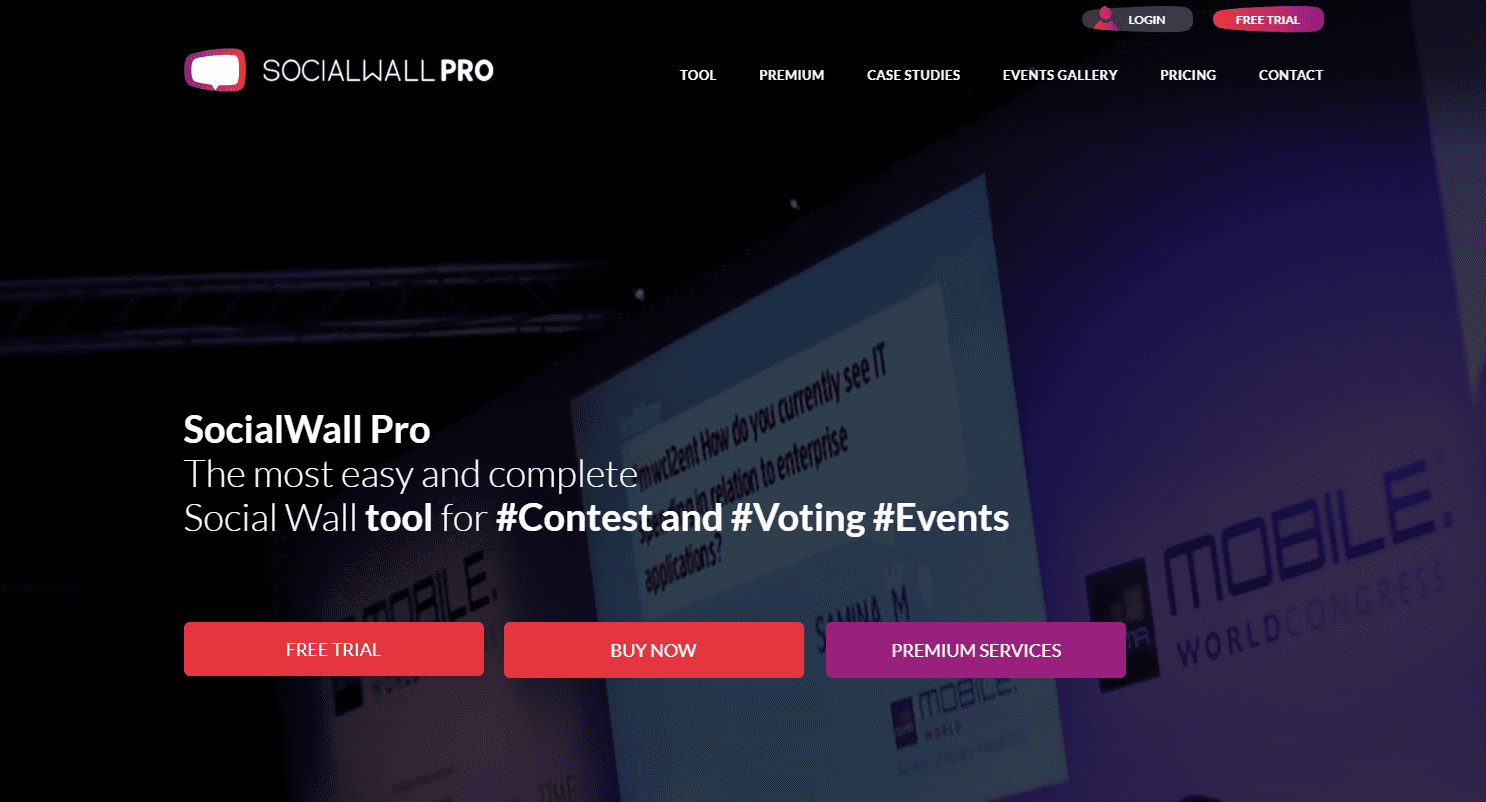
This tool is highly customizable and works for events of any size, helping brands display social media content, engage live audiences, and increase interaction. It also expands reach while making social wall experiences more fun, interactive, and profitable.
Core features
Customizable templates tailored for any event type
Real-time social media aggregation and display
Engagement tools to connect and entertain audiences
Pros and cons
Highly customizable templates, an intuitive interface, and strong moderation tools make it easy to engage audiences at events. However, its few reviews and smaller user base may make big companies less confident in choosing it as a long-term solution.
Pricing
The Basic plan costs $400 per month and suits personal events. The Pro plan is $1,500 per month for organizers who need advanced branding and integrations. Premium services are fully customized on request, with tailored features, design, and dedicated support for agencies and large brands.
Ratings
4.5 stars on G2
4. Taggbox
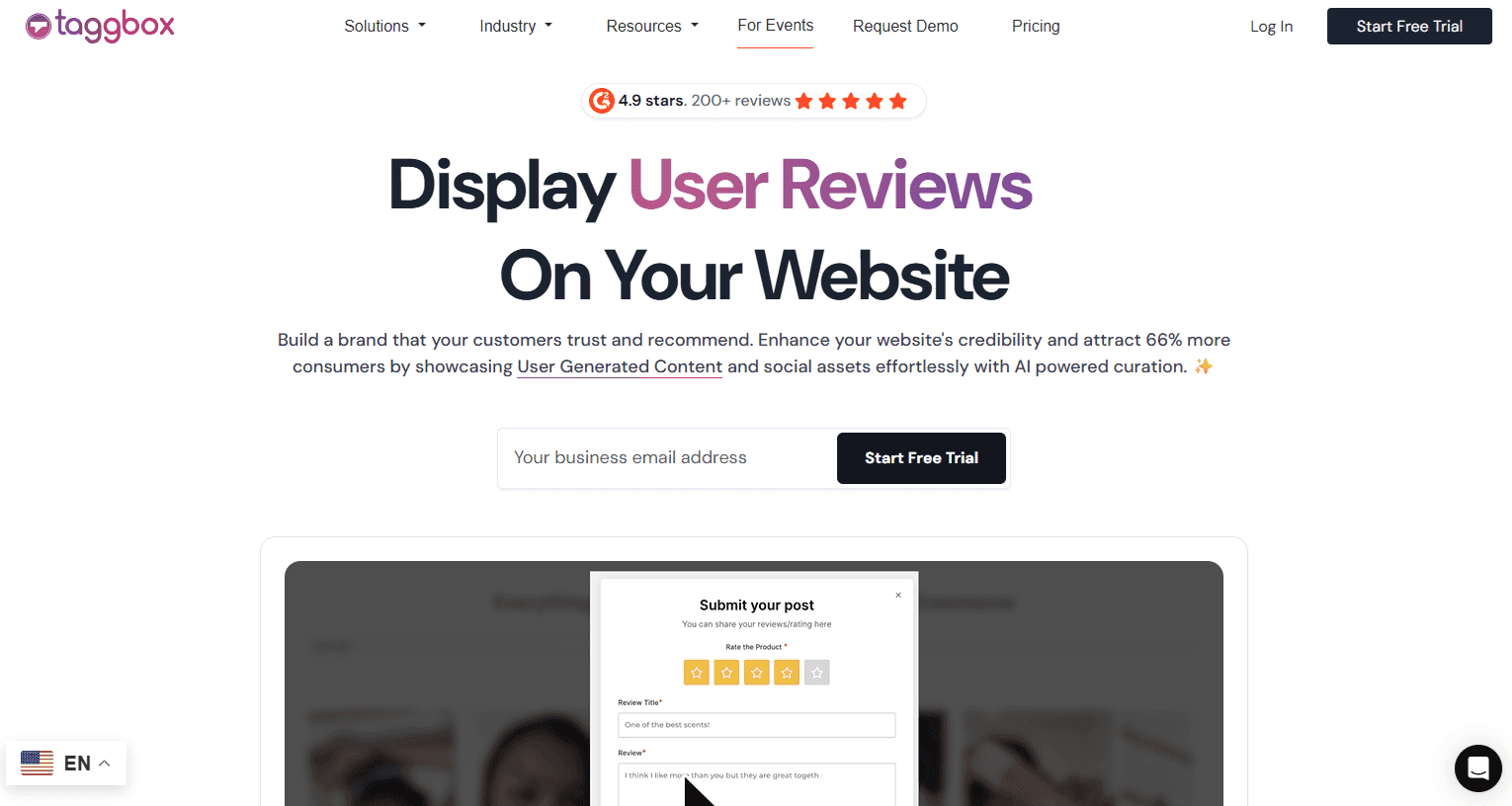
This social media aggregator collects user-generated content and reviews from 15+ platforms, helping brands showcase authentic posts on websites and events. With AI-powered curation, Tagbox creates personalized digital experiences that build trust, boost engagement, and drive conversions.
Core features
Advanced moderation and filters
AI-powered curation tools
Shoppable galleries for e-commerce
Performance analytics and insights
Website, event, and display integration
Pros and cons
Easy to use, highly customizable, and backed by excellent customer support, Taggbox makes displaying social feeds and reviews seamless. However, occasional technical glitches and limited filtering options may create minor hurdles for new users learning its many features.
Pricing
Flexible options include a $149 weekly pass for small events, $299 monthly pass for mid-size events, and custom enterprise solutions with advanced features and unlimited attendees. For signage, Lite starts at $39/month, Pro at $79/month, with enterprise plans tailored for agencies.
Ratings
4.8 stars on G2
4.8 stars on Capterra
5. Flockler

Flockler enables brands and agencies to embed unlimited social media feeds, reviews, and shoppable UGC across websites, emails, and events. With customizable layouts and live hashtag campaigns, it boosts engagement, trust, and conversions while keeping audiences connected seamlessly across multiple channels.
Core features
Aggregates social media and reviews into one feed
Shoppable UGC feeds and review forms
API access for custom integrations
Built-in analytics and rights management
Pros and cons
Easy setup, unlimited layouts, and strong customer support make it a reliable social wall solution. That said, Flockler costs more than most competitors, and beginners may find its wide range of features overwhelming.
Pricing
Pricing begins at $110 per month for Basic, $195 for Business, and $325 for Pro when billed annually. For larger needs, a Premium plan with custom pricing is available. Every plan gives you unlimited layouts, page views, and users.
Ratings
4.9 stars on G2
4.7 stars on Capterra
6. Juicer.io

A social media aggregator that pulls content from multiple platforms into one seamless feed. It lets you display posts, hashtags, and updates directly on your website, with easy moderation and customizable themes. Juicer's automatic syncing also helps keep your social wall exciting with regular content updates.
Core features
Easy website embed or WordPress plugin support
Automatic real-time updates across feeds
Moderation and filtering tools for curation
Analytics for engagement insights
Pros and cons
Easy setup, automatic updates, flexible customization, strong moderation, and reliable support make it highly valuable. However, some users note slower sync times, limited customization on lower plans, and occasional integration hiccups that sometimes disrupt real-time performance.
Pricing
Juicer offers a Free plan that's $0 forever. Paid plans include Lite at $13.50/month, Starter at $22.50/month, and Pro at $89/month (all billed yearly). Enterprise plans start at $199/month, and Event pricing is $299/year. Everything's contract-free with no hidden fees.
Ratings
4.4 stars on G2
We also have a full breakdown of Juicer.io alternatives.
7. Onstipe
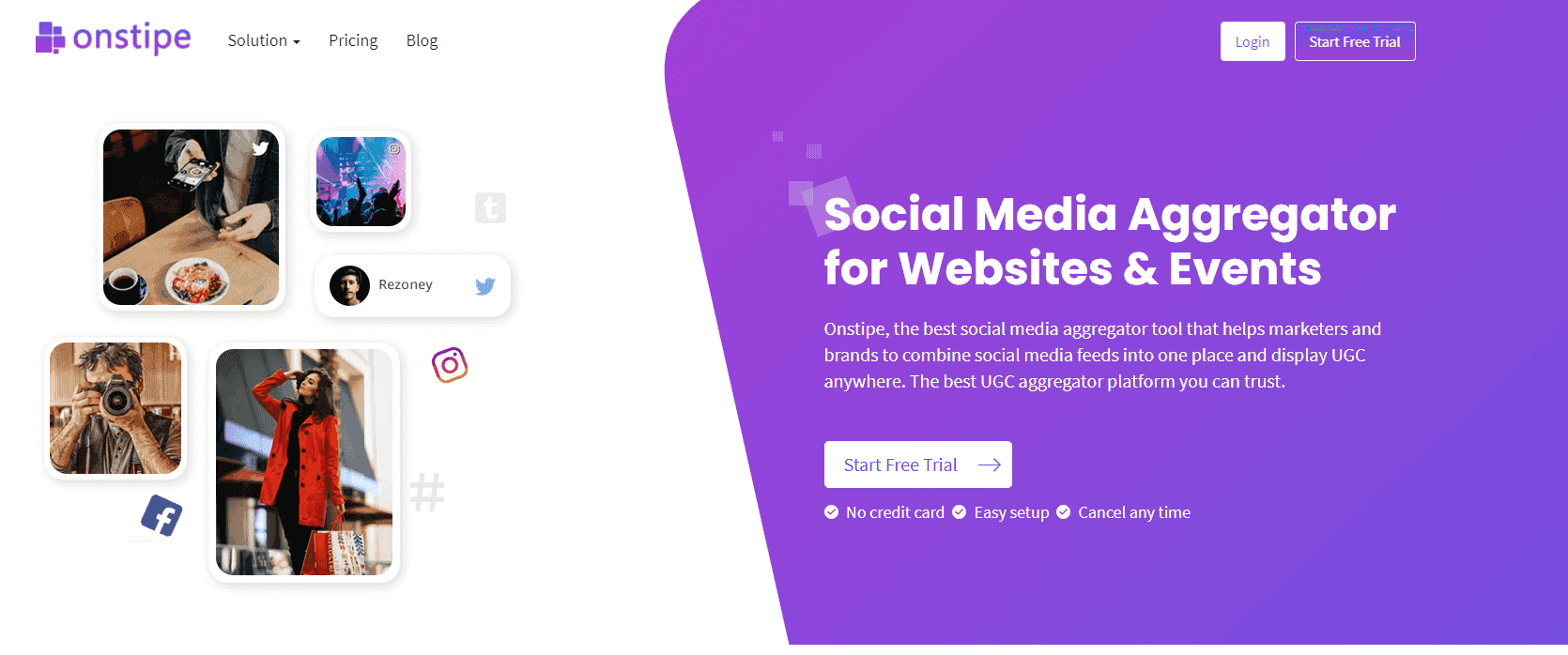
A powerful social media aggregator that collects, curates, and displays content from multiple platforms in one stream. Ideal for websites, events, and campaigns, it offers real-time moderation, responsive layouts, hashtag feeds, and custom designs. Onstipe's insightful analytics can also help you boost engagement and conversions.
Core features
Real-time updates with moderation and filters
Shoppable social feeds for e-commerce
Advanced analytics and engagement insights
AI-powered moderation on higher plans
Pros and cons
Easy setup, flexible layouts, solid content management, and affordable pricing make it appealing. On the downside, it can load slowly at times, has limited multilingual support, doesn't offer content pre-approval, and charges more for advanced features.
Pricing
Onstipe's pricing starts at $7/month for the Nano plan and goes up to $59/month for the Business plan, billed quarterly. Developers can use the free forever plan, while enterprise users can request custom solutions. Every plan comes with easy setup, social feed aggregation, and reliable support.
Ratings
4.5 stars on G2
4.7 stars on Capterra
8. Tagembed
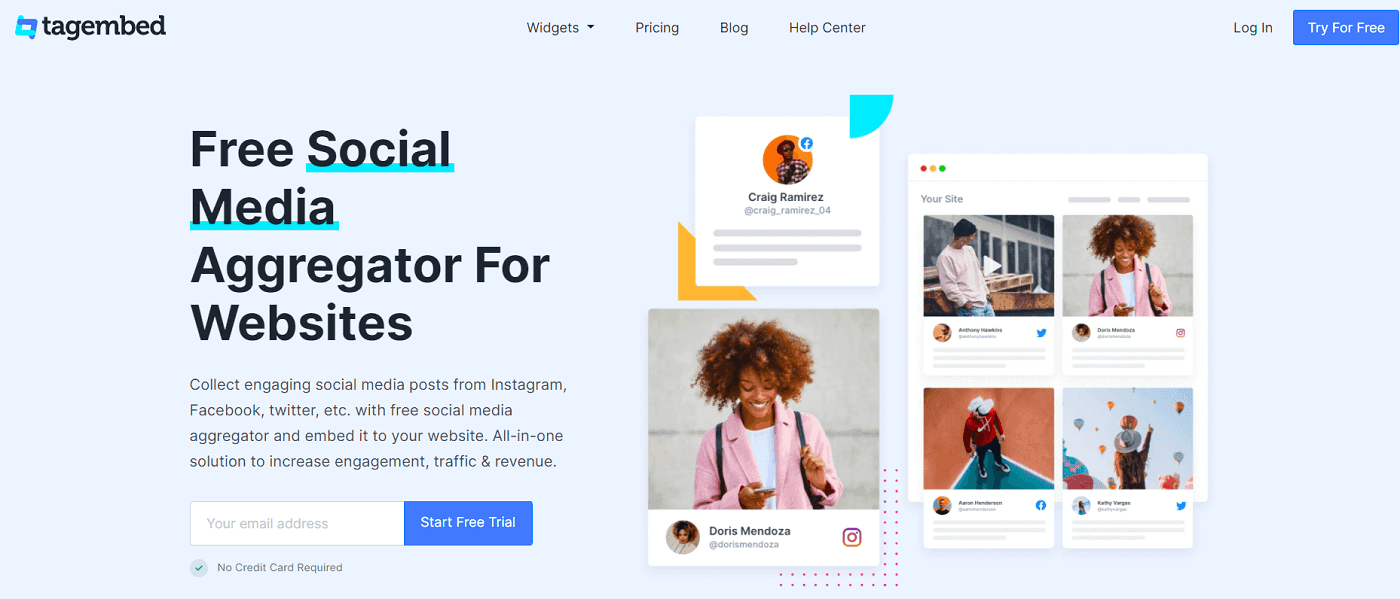
Tagembed is a powerful social media aggregator that pulls feeds, reviews, and stories from 20+ platforms into customizable widgets. It turns user-generated content into shoppable galleries, boosts engagement with reviews and stories, and includes moderation, analytics, and easy integration with all major CMS platforms.
Core features
Customer reviews and social stories
Advanced post moderation and filter controls
Customizable feeds with layouts, themes, and CSS
Pros and cons
It's praised for being easy to use, having responsive customer support, and offering smooth integrations. However, some users raise concerns about pricing, limited features, and confusing billing, making it a strong but not perfect solution.
Pricing
Tagembed offers flexible plans, starting with a free tier. Paid options include Starter at $19/month, Growth at $29/month, and Advance at $79/month, each with higher limits and features. Agency and enterprise plans add white-labeling, custom APIs, and dedicated support.
Ratings
4.7 stars on G2
For the wider field, see the best social media aggregators, free social media aggregator tools, and the CrowdRiff alternative breakdown for enterprise UGC platforms.
How Curator and Walls.io compare in 2026
Two setup walkthroughs and what each tool costs this year. Walls.io goes first, since that is probably the quote sitting in your inbox. Curator follows, including the parts where it is not the right answer.
Setting up a wall with Walls.io
Signup starts a 14 day trial with every feature unlocked and no credit card required. You test the moderation, the layouts, and the add-ons before committing.

The catch arrives on day 15. Your account goes inactive until you pick a product line and a plan, and two weeks is not long to work out which one you need.
"A trial with everything switched on tells you more in two weeks than a free plan tells you in a year. The catch is that you have to decide at the end of it, and most teams have not worked out what they are buying by then." — Mike Hill, CEO and Co-founder, Curator
What Walls.io does well, and where it falls short
Walls.io is built for buyers with a procurement process. EU hosting, GDPR and CCPA compliance, cookieless embeds, and WCAG 2.1 accessibility are all included, and cheaper tools rarely clear that bar. Every plan allows unlimited domains, and the live polls and photo booth work well in a room full of people.
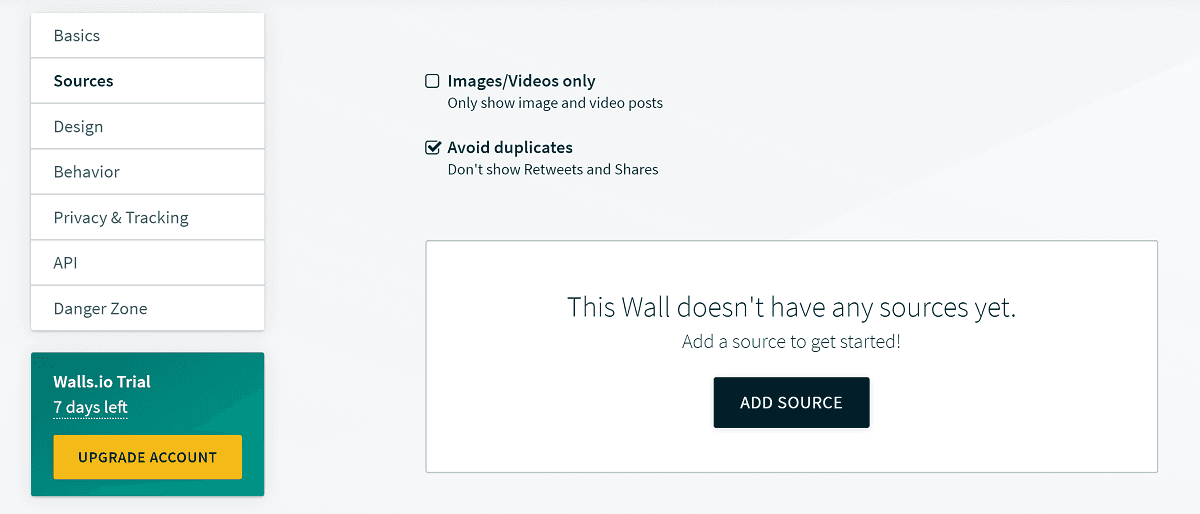
The downsides: no free tier, pricing that assumes an event budget, and add-ons billed separately.
What Walls.io costs in 2026
Three product lines, priced separately. The Event Pass is a one time 30 day purchase. Websites and Digital Signage are subscriptions sold as Professional or Premium, with source counts stepping up between the tiers. Annual billing saves 20%, and Source Packs add sources without moving up a tier.
At the top end, enterprise contracts typically start around $6,900 a year.
Setting up a feed with Curator
Curator starts with a source. Pick a network, then choose a hashtag, a profile, or a geolocation. Geolocation is the one people forget, and it works well for an event or a campus.
After choosing the source(s), the next step is to select what feed they go to. The great thing about Curator.io is that right when you make a new feed, the pop up asks you what moderation style you want. By not hiding the moderation setting the way that Walls.io does, you make sure that you don't accidentally display some really bad stuff on your feed!
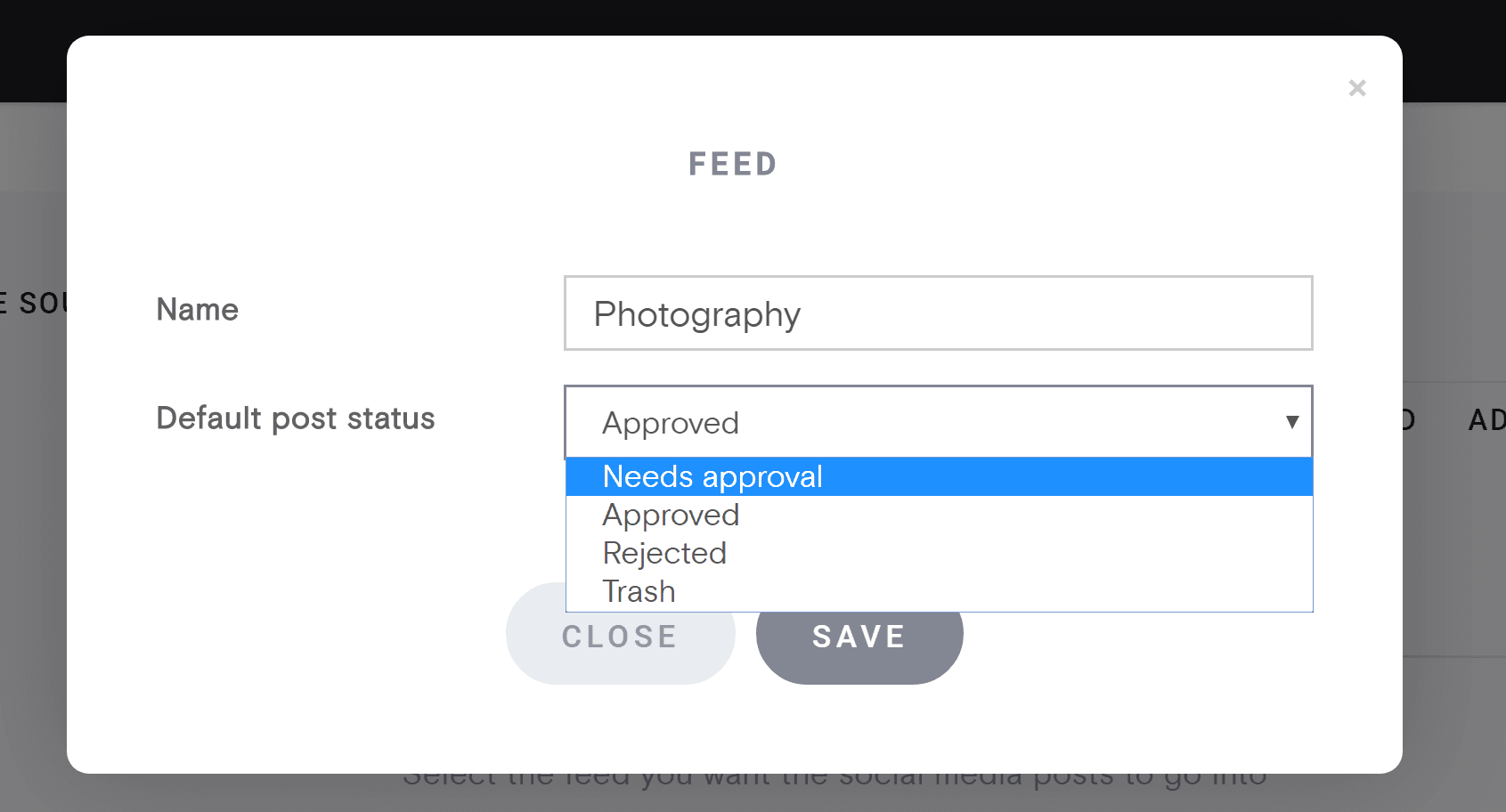
I set every new feed to manual approval on the first run, then loosen it once I trust the source. It takes an extra minute and saves a bad week.
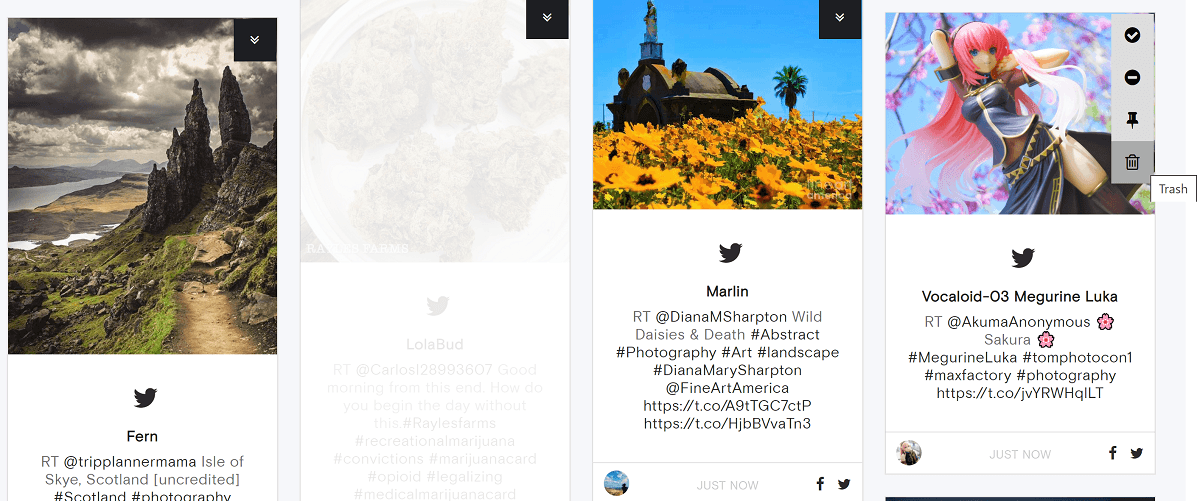
Then, it's easy to curate your content by removing posts you don't want to show.
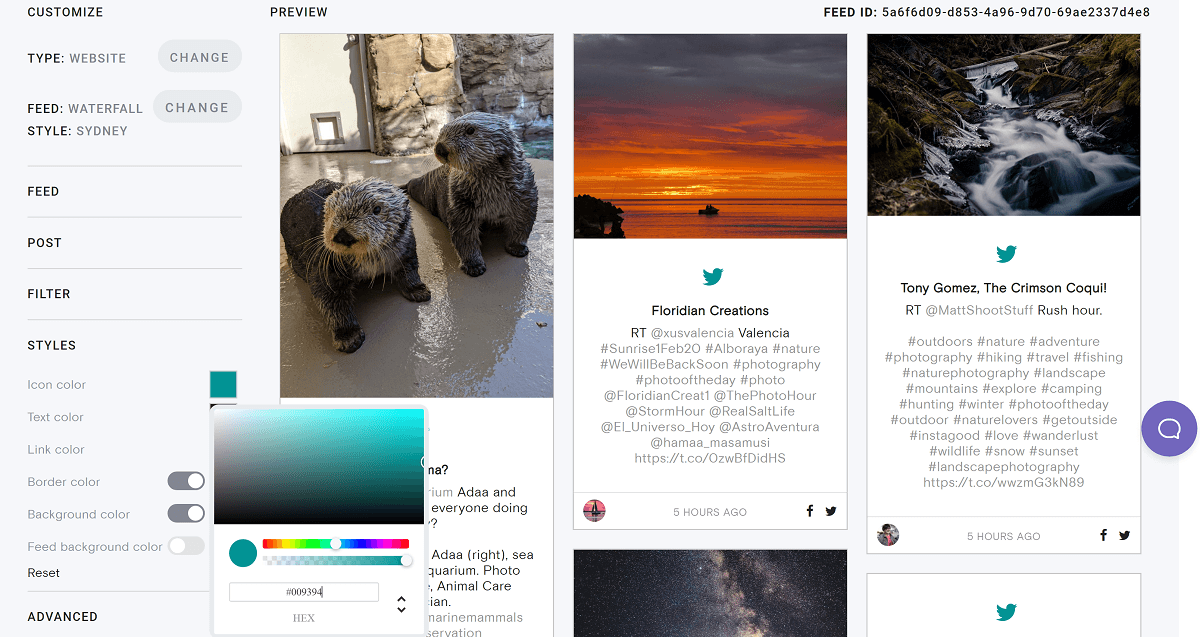
And lastly, the customization part is super easy. Just select a template, choose whether or not you want text captions to appear, and customize the font and logo colors.
What Curator does well, and where it falls short
The pros hold up: quick setup, colour customization on the free plan, minimal branding, and plenty of feed templates.
Two honest cons. The free plan caps at 2,000 monthly views, which your site will probably hit before it runs out of sources. And the premium sources, X, TikTok hashtags, LinkedIn, and Google Reviews, sit on the $59 Business plan rather than Pro.
What Curator costs in 2026
Pro at $25 removes the branding and refreshes hourly. Business at $59 adds unlimited views, faster refresh, API access, and the premium sources.
A regional events agency came to Curator after pricing an Event Pass for each of the six conferences it runs annually. Six passes cost more than several of its client retainers. It moved the always on website feeds to a Business plan, keeping a budget line for the two events that needed live tooling. Spend fell by two thirds.
Curator.io vs. Walls.io pricing comparison
Three situations, three answers.
One event this year with a live audience in the room. The Walls.io Event Pass is probably right, and Curator's event product is worth a look alongside it. You are buying real time refresh and engagement tooling.
An always on feed on a company website. Curator does this for a fraction of a website subscription, as these social media wall examples show. This is where the Walls.io quote answers a question you never asked.
Enterprise procurement, with data residency and accessibility requirements in the RFP. Walls.io is built for exactly that, and Curator will not pretend otherwise.
Being straight about the third case is what makes the second one worth believing.
"Most people asking for a Walls.io alternative do not want a cheaper social wall. They want to stop paying event prices for something that lives quietly in a website footer." — Dave Ganley, Technical Director, Curator
Walls.io alternative FAQs
Does Walls.io still have a free plan?
No. Walls.io retired its free plan and replaced it with a 14 day trial that unlocks every feature and does not ask for a card. When the trial ends, your account goes inactive and your settings are held until you choose a plan. If a genuine free tier is what you are after, Curator's free plan is still running with three sources and 2,000 monthly views.
What is the cheapest Walls.io alternative for a website feed?
Curator's free plan costs nothing and covers three sources at 2,000 views a month, which suits a low traffic page. Once you outgrow that, Pro at $25 a month removes the branding and refreshes hourly. A few tools on this list start lower on paper, though the cheaper free tiers usually come with visible branding or ads in the feed.
Is Walls.io worth the price if I only need a feed on my website?
If your procurement team asks about EU hosting, GDPR posture, or WCAG accessibility, then yes. The price buys something specific and Walls.io delivers it. If nobody is asking those questions and you want a tidy social feed on a page, you are paying for a system built for conference halls. Work out which situation you are in before you renew.
Previous post: