UGC is an essential form of marketing and content creation for any ecommerce company. Even luxury car brands and big box retailers post user generated content to their social media feeds.
Small and large ecommerce companies alike can benefit from UGC, which offers real, humanized content as well as social proof.
In this post, we explore why UGC is so important for ecommerce companies, showcase examples, and offer specific tips on how to collect and utilize UGC.
Curator.io is an easy-to-customize aggregator that lets you pull from over a dozen sources. If you'd like to give Curator.io's free forever plan a spin sign up today.
Why does UGC help ecommerce companies gain customers?
Adding ecommerce UGC to your brand’s arsenal can give it an edge in outshining competitors and attracting and retaining customers. Here are some specific ways it can do so:
1. Social proof that builds trust
UGC gives your brand powerful, believable social proof. When shoppers see real people using and loving your products, it carries far more weight than polished testimonials or generic reviews. Photos and videos from actual customers show size, fit, quality, and everyday use, which are things most professional shoots fail to capture. In fact, over 80% of ecommerce marketers believe that UGC is more impactful in reaching customers than brand or influencer content.Its authenticity reassures new buyers that your product delivers on its promise. And because UGC feels spontaneous and unscripted, it breaks through the skepticism many customers now have toward brand-created content. In ecommerce, trust drives conversions, and nothing builds trust faster than real customers showing real results.

2. Humanizes your brand
With over 70% of the U.S. population on social media, customers crave relatable, human content. Not endless studio-perfect photoshoots. UGC for ecommerce solves this by showing real people interacting with your products in their daily lives, creating a more welcoming and authentic brand presence.
These posts feel relaxed, organic, and honest, making your social feeds more dynamic and less curated. They also help potential customers see themselves in your brand, which strengthens connection and boosts confidence.
3. Stronger customer relationships
When customers share photos, stories, or videos featuring your products, they feel personally connected to your brand. They become participants in your community instead of mere buyers. Highlighting their posts, resharing their content, or engaging with their stories gives them a sense of recognition and appreciation. This strengthens loyalty and encourages repeat purchases.

For creators, influencers, or hobbyists, like the above knitting influencer example, UGC becomes a way to celebrate their work while showcasing your product in action. Over time, these shared moments build a brand culture rooted in belonging, creativity, and collaboration.
4. Social media engagement
UGC consistently outperforms polished brand photography in terms of likes, comments, shares, and saves. People connect more deeply with real-life images and videos because they feel genuine and relatable. This means your social media posts travel further, stay visible longer, and attract more organic engagement.
Better engagement signals boost your performance on social algorithms, helping your posts reach new audiences without additional ad spend. And since UGC lowers your content-creation burden, you get more frequent posts for less work. It’s a performance win and a budget win.
5. Boost conversions
UGC doesn’t just look good. It sells! About 82% of consumers say that they are more likely to buy from a brand that uses UGC.
Adding customer photos and videos to product pages helps shoppers visualize how an item fits, works, or looks in real life. This reduces uncertainty, boosts confidence, and often leads to higher add-to-cart rates. Because UGC answers questions before they become objections, it naturally pushes customers closer to checkout.
6. Increased customer satisfaction
Since UGC shows products in honest, unfiltered scenarios, it sets more accurate expectations. Shoppers know what the color actually looks like, how big the product really is, or how it performs in everyday life.
Clear expectations mean fewer surprises when the item arrives, and that translates into fewer returns and complaints. This transparency builds long-term trust and keeps customers coming back.
Examples of UGC for ecommerce
To help spark your excitement for acquiring UGC for your own ecommerce brand, let's take a look at some examples.
Toy brand Nerf

Nerf makes toy guns with foam-based ammo. On its Instagram page you’ll find tons of happy customers having family-friendly fun that’s colorful and thrilling. This UGC makes viewers want a similar experience with friends and family.

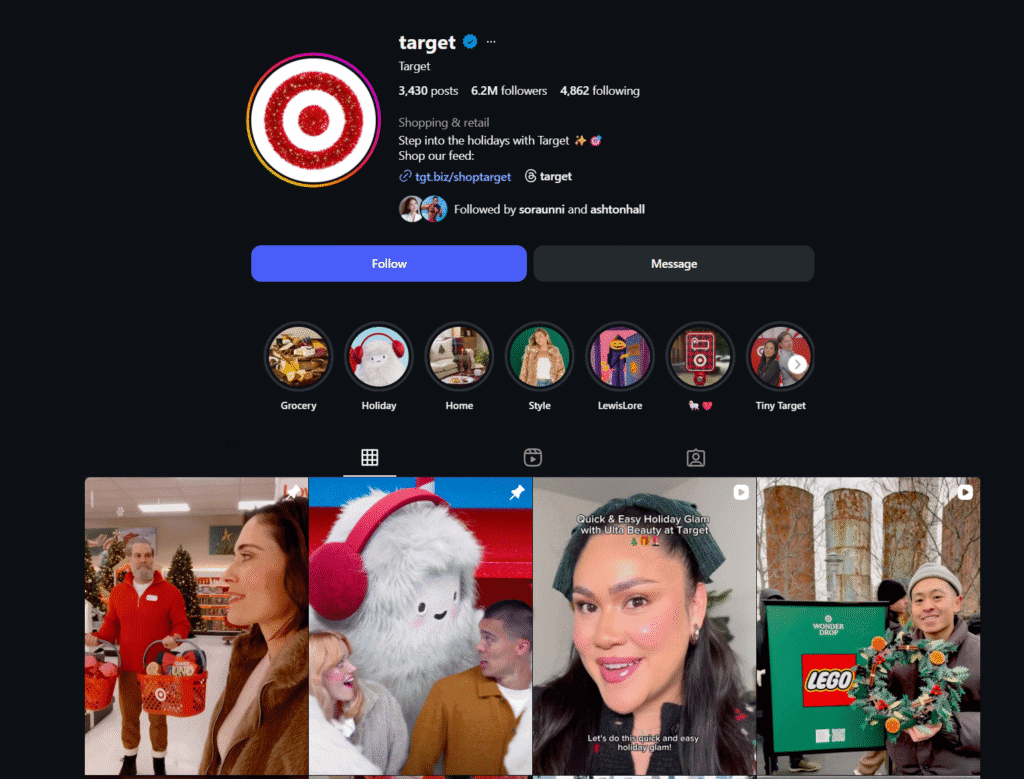
Retail giant Target

Retail powerhouse Target joined the Stranger Things trend by showcasing UGC from shoppers enjoying their Stranger Things–themed products, turning fan excitement into engaging, on-brand content.
Lip balm brand Chapstick

Chapstick uses a mix of brand-created content and UGC to engage its Instagram viewers. The UGC adds authenticity to the brand’s page, showing real people using its products to elevate their lips and lives.

Baby diapers Pampers

Pampers also uses a mix of brand-created content and UGC. A cursory look at their Instagram page shows that posts showing real people using their products get far more comments and engagement than other posts. This once again proves the power of UGC ecommerce.

Camera brand GoPro

GoPro’s TikTok page has a myriad of videos from customers capturing their adventures with the brand’s cameras. Each one is enough to tempt viewers to go on their own adrenaline-spiking adventure with a GoPro.

Adventure tracking device SPOT
SPOT is a tracking advice for adventurers. On their Instagram account, they show pictures of hikers who have the tracking advice fixed on their backpacks or kept inside their gear.

Skin care brand Golde
Golde is a black-owned ecommerce company that offers natural skin care products. Their Instagram posts and stories frequently feature user generated content.


You can view plenty more user generated content examples here.
How can UGC be utilized?
User generated content can be utilized in a few key ways as an ecommerce brand:
Post UGC on your social media accounts. (Instagram is the top platform for UGC, but you should post UGC on all platforms.)
Include UGC on individual product pages. For example, if you sell pillows, show UGC of the small red pillow on the product listing page of the small red pillow.
Add UGC to the homepage of your website. Make your brand more exciting and customer-centric by placing UGC on your main website. You could put it on your homepage, your mission page, your about us page, etc.
6 ways to collect user-generated content as an ecommerce brand
Now that you're motivated to start collecting your own UGC and using it to promote your ecommerce company, you might be wondering... where do I begin?
Here are the top three ways to collect more UGC.
1. UGC contests
A common way to drive UGC as an ecommerce company is to hold a contest.
During the span of one two-week contest, you can potentially drive enough UGC to satisfy your social media content calendar for several months. You can integrate this feature into your website if you are building your website using the best ecommerce tools. This integration shows the UGC content on your ecommerce website.
Keep scrolling for our step-by-step UGC campaign tutorial below.
2. Prompt customers to share UGC on your website
Your website is one of the best ways to get more UGC for your products. Take a look at these examples and suggestions for asking your website visitors for UGC.
Your product pages - For products that don't yet have any UGC, accessories brand Fossil urges website visitors to "Be the first to upload a photo of your new accessory" and shows user generated content for other products with a soft-focus filter.

Your website homepage - Dover Saddlery asks website visitors to upload photos with the hashtag #itsfromdover on Facebook and Instagram for a chance to be featured on their home page.

Dover Saddlery uses Curator to showcase UGC on their ecommerce website, and they ask users to share their own posts ("Use #itsfromdover on Facebook and Instagram to be featured on our homepage!).
Curator.io is an easy-to-customize aggregator that lets you pull from over a dozen sources. If you'd like to give Curator.io's free forever plan a spin sign up today.
3. Ask for more UGC in your social media posts
You can also ask customers to share content using your branded hashtag, even without incentivizing it as part of a formal user generated content campaign.
Every time you share UGC on Instagram, for example, end the post caption with something like "Want us to share your photo? Tag your own post #yourbrandedhashtag for a chance to be featured on our account!"
Even if someone uses your branded hashtag, don't take this as explicit permission. They may have used it unknowingly. Always get permission before reposting something, even when it features your products and hashtags.
4. Incentivize UGC through loyalty programs
If your ecommerce brand has a loyalty or rewards program, you can use it to encourage more UGC. Offer points or small perks when customers upload photos, share videos, or post reviews that feature your products. This approach keeps the focus on genuine customer experiences while rewarding loyal buyers for their contributions.
5. Feature customer spotlights or stories
Highlighting real customers on your website or social media motivates others to join in. Sharing a “Customer of the Month” or spotlighting creative ways people use your product inspires more shoppers to submit photos for a chance to be featured as well.
6. Partner with micro-influencers
Micro-influencers create highly relatable ecommerce UGC that your customers often want to imitate. Their posts naturally encourage audiences to try your products and share their own experiences. This not only boosts UGC volume but expands your reach into new communities.
Step-by-step UGC contest campaign
Ready to launch your own great UGC campaign? To get a large influx of UGC quickly, you need to incentivize it. Turn the campaign into a contest and give away prizes to the customers who send in your favorite photos.
Step 1) Decide on the incentivization
Top incentivizes include VISA gift cards, free swag (think a limited-edition custom laptop case), and shopping sprees on your site. To make things even more exciting for entrants, include multiple prizes, not just one grand prize.
Step 2) Use a UGC collection tool
A software for running user generated content campaigns can help you save time managing your contest and make it easier for you to post the content on your own social media accounts.
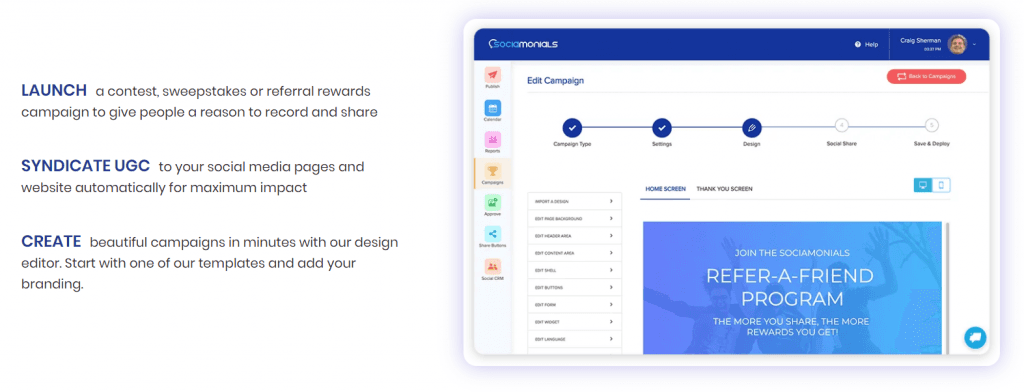
Look for a UGC software that offers these features:
Landing page creator to communicate the rules and prizes of the contest
Shares your campaign information on social media
Helps you collect and categorize the UGC
Helps you save content and utilize it on your social media accounts
Step 3) Share your contest via email and social media
You need to get the word out about your contest. You should include the rules and details about your contest in a few different email newsletters to your fan base.
You should also post about it multiple times on social media.
Here's an example caption:
Let's say your contest will run for one week. During this time, you should send out 3 email newsletters about the contest, and post 3 to 5 times on all of your social media platforms about the contest to help get the word out.
Step 4) Categorize the UGC and select your winners
You'll need to sort the UGC using your UGC campaign software or by scrolling through the hashtag you requested people to use.
Choose the winners of your prizes. Notify them individually, and also tag them in a post so your fan base knows that someone won (that it wasn't a fake contest).
Step 5) Create and implement a plan for using the UGC on social media
After your contest is over, you might have dozens or even hundreds of different posts to share on social media.
Add them to your content calendar or social media scheduling tool such as Hootsuite.
Step 6) Create and implement a plan for using the UGC on your website
You should also use a social media aggregator tool like Curator to add your best posts to your website.
Here's an example of jewelry company Adorn512 using Curator's free software on their website:

Adding your UGC posts to your website has the following benefits:
Acts as social proof for potential customers considering purchasing your products.
Improves the feel and look of your brand.
Maximizes the reach of your UGC (it's not just shown on social media, but your website too).
Encourages other customers to post pictures of your products.
UGC campaigns are important for any ecommerce company. The amount of effort that you need to put in is quite small for what you get out of it: tons of content that can improve sales for months or years to come.
FAQs
What is UGC in ecommerce?
UGC in ecommerce is customer-created content such as photos, videos, or reviews that showcase real product experiences. Brands use it to build trust, boost engagement, and drive more confident purchase decisions.
How to get UGC for ecommerce?
You can collect UGC by running contests, creating branded hashtags, featuring customer posts on your website, prompting shoppers for uploads, offering small incentives, and resharing approved content to encourage more participation over time.
What are UGC ecommerce examples?
UGC ecommerce examples include Nerf fans sharing playful action shots, Target shoppers posting Stranger Things finds, Chapstick users showing real-life lip care, and Pampers parents sharing baby moments. These authentic posts boost trust, relevance, and engagement.
Previous post: