You’ve spent time building a strong social media presence, but when you embed those posts on your website, the feed often feels disconnected from the rest of your brand. Maybe the colors clash, the layout looks messy on mobile, or the posts simply don’t fit the style and experience you want visitors to have. Instead of adding value, an unstyled feed can make your website feel inconsistent and harder to navigate.
That’s why more businesses are investing in better social media feed customization. A well-designed feed can help you showcase customer content, strengthen trust, improve engagement, and create a more polished website experience — all while keeping your content fresh automatically.
In this guide, we’ll show you how to customize social media feed layouts, improve your social media feed design, and choose the right templates, moderation settings, and embed social media feed options for your website, ecommerce store, portfolio, event page, or social proof section.
Why social media feed customization matters
Your social feed is often one of the first things visitors notice on your website. A clean, curated feed can instantly make your brand feel more trustworthy, modern, and engaging.
Better design builds credibility
Research consistently shows that users judge website credibility based heavily on visual design. Consistent branding, clean layouts, and polished imagery help create a stronger first impression and improve brand recognition over time.
Social content also plays a growing role in how people discover and evaluate brands. According to Sprout Social, platforms like Instagram, TikTok, and YouTube now account for over 60% of product discovery online.
Native embeds vs customizable feeds
Default social embeds often feel disconnected from the rest of your site. They can include inconsistent fonts, oversized platform branding, cluttered layouts, and unmoderated posts that weaken your overall website experience.
A customizable social media feed gives you more control over:
Social media feed design
Moderation and approval workflows
Branded colors and layouts
Responsive mobile styling
Multi-platform content displays
Curated feeds improve engagement
Thoughtful social media feed customization makes content easier to browse and more visually appealing. Whether you want to customize Instagram feed layouts or combine content from multiple platforms, curated feeds help your social content feel like a natural part of your website instead of an afterthought.
And authenticity matters. Sprout Social found that 52% of users prefer social search when looking for user-generated content and personal experiences.
With Curator, brands can moderate posts, approve UGC manually, and choose from customizable templates that blend seamlessly into existing website aesthetics.
How to customize the look and feel of your social media feed
Before you can adjust your feed, you’ll need to take a few easy and quick steps first.
Want to jump straight in? Watch the video above!
Step 1: Name your feed
The first thing you’ll need to do to is name your feed. You can call it anything you want, as long as it’s clear to you what you’re referring to.
Also, you’ll need to decide on your posts’ approval setting. Here are your options:
Approved - Any content you curate will automatically be added to your website. If needed, you can always manually remove posts that you don’t like.
Needs approval - All social media content you want on your website must be manually added by you.
The setting you choose depends on your brand and the type of content you’re curating.
Step 2: Choose a source
Next, you need to pick a source, a social media platform, or a network that you get social media content from. And below, you’ll see that there are over ten different sources you can choose from.
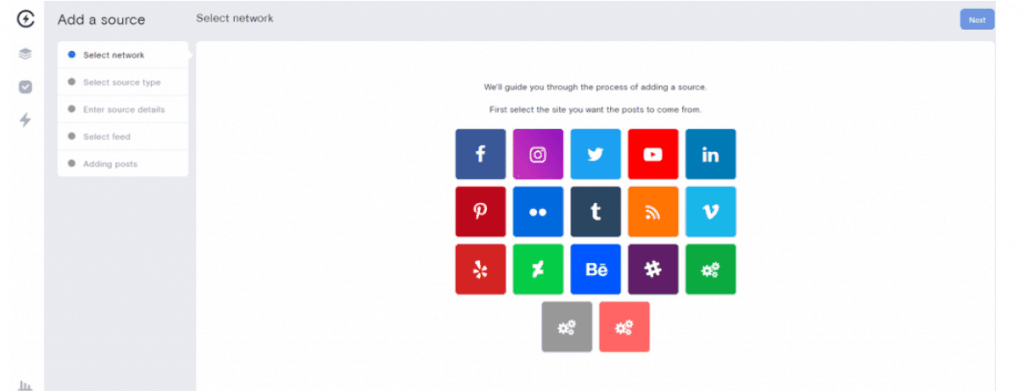
After you’ve decided on the source and source type, you’ll need to add the necessary details which are unique for each source type.
We discuss how to add and choose a source in more detail here.
Step 3: Curate your social media content
Next, you’ll need to curate your content, this means you’ll need to approve or reject content before it’s published on your site.
If you choose to let your content be published automatically, all you need to do is manually delete any posts you don’t want to add.
Or, if you choose to add your content manually, you only need to pick what posts you want to be published, or none of them will show.
You can also use our profanity filters to get rid of content that's not suitable fro your website.
Curator.io is an easy-to-customize aggregator that lets you pull from over a dozen sources. If you'd like to give Curator.io's free forever plan a spin sign up today.
Step 4: Customize social media feed
We’ve covered adding a feed and source and curating social media content, now let’s walk through customizing your social media feed.
Below, you’ll see the default layout option, Waterfall, which allows your content to flow down the page in tiles.
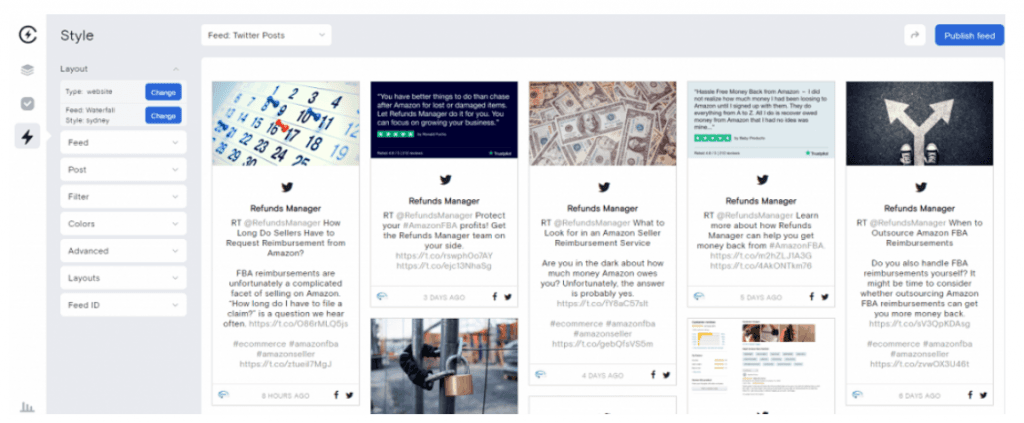
Besides the Waterfall layout, you can also choose from…
Carousel - One row of your posts will rotate automatically. It’s great for showcasing multiple products or highlighting different variations of the same product, such as Printify custom hats.
Panel - Shows one post at a time that’ll change after a set amount of time. It’s perfect for helping your visitors focus on one post.
Grid - Displays a series of posts without the caption; you can see all information related to a post by clicking it. It’s best when you want your visitor to focus on the image.
Grid carousel - A rotating grid with hidden but easily accessible captions. It’s optimal for minimizing space without sacrificing value.
List - Shows your posts in a single list that flows down the page. It’s great if the order of your content matters or if you have a dedicated page for your curated content.
In addition to layouts, you can also choose between different styles, which determines how the posts are displayed.
The layout and style you go for are based on your goal and where you want to place the content. For example, if your curated posts are going on your homepage, consider the carousel, panel, or grid carousel layout.
Each of those is an excellent option to help you save space, share posts, and keep visitors engaged with your original website content.
There are various ways you can customize social media feed to fit your brand and needs.
One way is to change the color of the social media icon, text, feed background, border, link, and background. You don’t need to make drastic changes if it’s not necessary. You just need to find a balance between the posts being aesthetically-pleasing and on-brand.
Curator offers easy settings for colors, fonts, and borders, as well as custom CSS for advanced users.
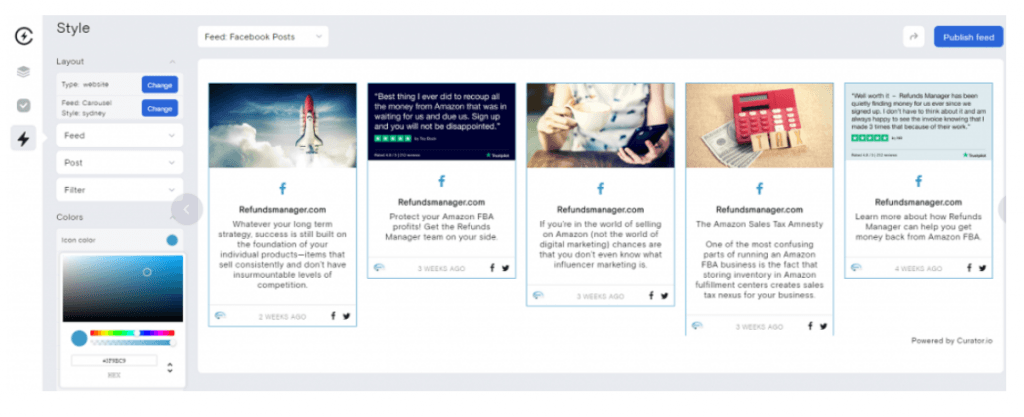
Not happy with the outcome? You can reset it with one click. Or if you like to keep it simple and prefer the default style, it’s totally up to you.
Choosing the right feed layout for your website
The best social media feed layout depends on where you place the embed and what you want visitors to do.
Homepage feeds work best for visual storytelling and brand engagement
Footer feeds keep fresh content visible across your entire site without overwhelming the design
Sidebar feeds are ideal for blogs and smaller layouts where space is limited
Product page feeds help increase conversions by showcasing user-generated content and customer photos
Event page feeds are perfect for aggregating hashtag content and live updates
Testimonials or “wall of love” pages build social proof using customer mentions and reviews
Different embed social media feed options also support different goals:
Grid and Mosaic layouts work well for visual brands
Carousel feeds increase interaction while saving space
Waterfall layouts are ideal for caption-heavy storytelling and UGC
With Curator, you can even create separate desktop and mobile layouts for a better user experience. The platform also uses lightweight, SEO-friendly Javascript embeds so feeds load quickly without slowing down your website.
Examples of customized social media feeds
Let’s look at some examples of how businesses customize social media feed on their website.
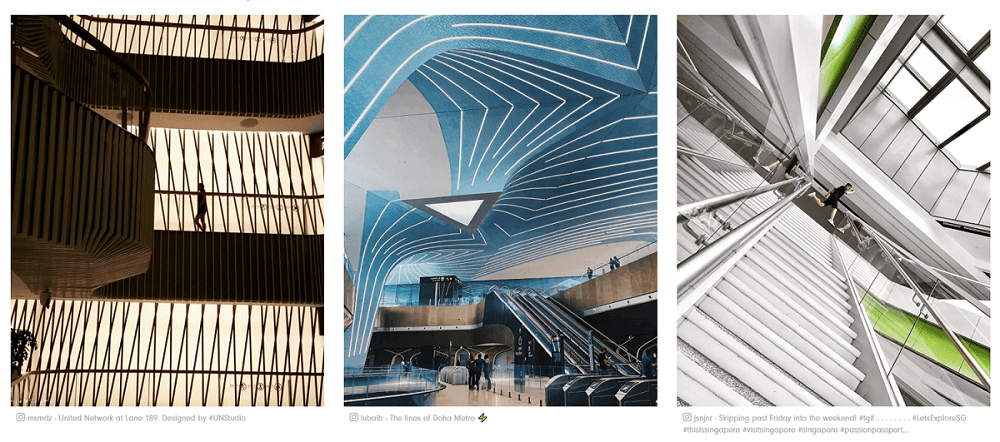
UNStudio
UNStudio is an architecture design network that creates building designs with the future in mind. The content they curate is the buildings they designed that is currently being used. Like the rest of their site, the text isn’t what matters; it’s the images.
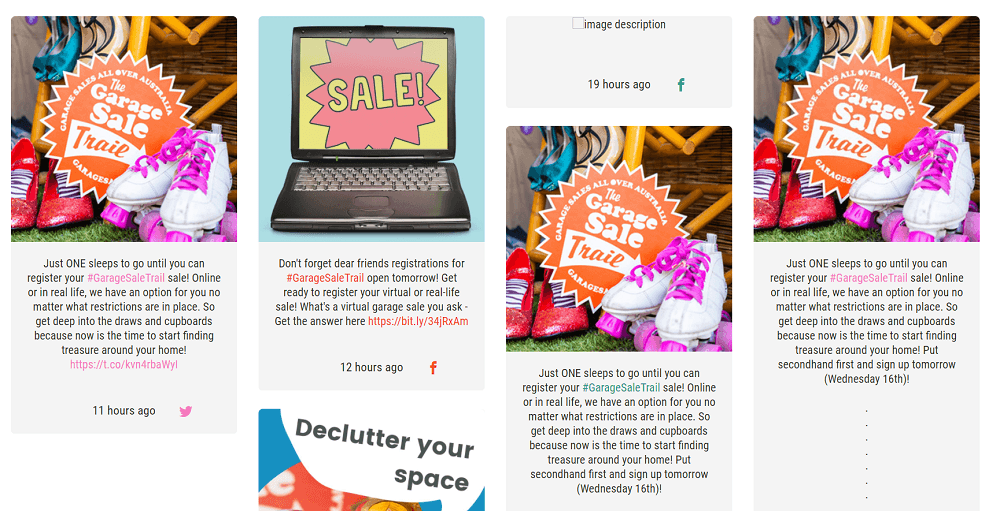
Garage Sale Trail helps its audience buy or sell secondhand merchandise online or in-person. They use #garagesaletrail to curate social media content. And they customize their posts by changing the hashtag and link color to fit their brand.
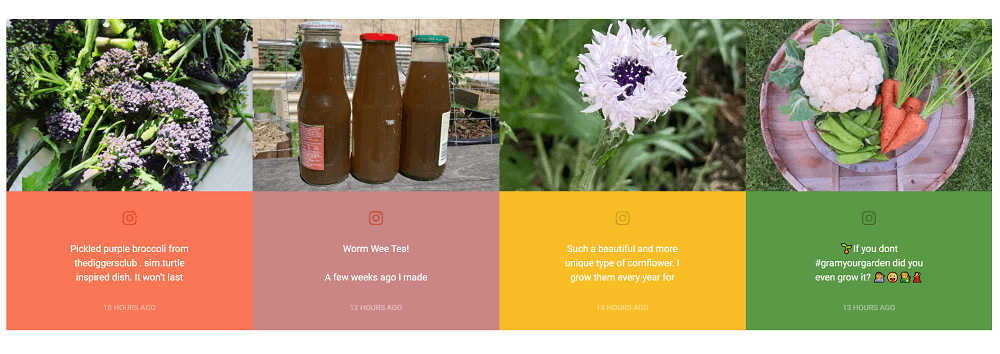
Grow It Local is on a mission to help more people grow and eat their own food and share their results. Because their entire purpose is to share food that people grow, they use #growitlocal to curate content for their site. And they also customized their feed by adding their brand’s colors as the background of each post.
Best practices for social media feed customization
A well-designed feed should feel like a natural extension of your website — not a third-party widget dropped onto the page. These simple adjustments can dramatically improve your social media feed design and overall user experience.
Match your brand colors
Use your website’s existing color palette for icons, backgrounds, links, and text. Consistent branding helps improve recognition and makes your feed feel more polished and trustworthy.
Use spacing strategically
Spacing has a huge impact on readability. Adding space between posts creates a cleaner layout and prevents feeds from feeling cluttered, especially when embedding content from multiple platforms.
Limit text lines for cleaner layouts
Long captions can quickly overwhelm a page. Limiting visible text lines keeps feeds easier to scan while maintaining a more modern, organized appearance.
Prioritize mobile-friendly layouts
Most visitors will view your feed on mobile devices. Choose responsive templates and post widths that adapt well to smaller screens without sacrificing readability or image quality.
Choose layouts based on page goals
Different layouts work better for different use cases:
Grid layouts work well for ecommerce and portfolios
Carousel feeds help save homepage space
Waterfall layouts are ideal for storytelling and captions
Panel layouts fit neatly into sidebars or smaller sections
With Curator, you can customize layouts, moderation settings, spacing, styling, and mobile responsiveness without needing advanced code.
7 feed templates to instantly improve your social media feed design
The right template can completely change how your embedded feed looks and performs. Instead of relying on cluttered native embeds, modern templates help improve visual consistency, mobile responsiveness, engagement, and overall social media feed design. They also give brands more flexibility when choosing embed social media feed options for different parts of their website.
1. Grid
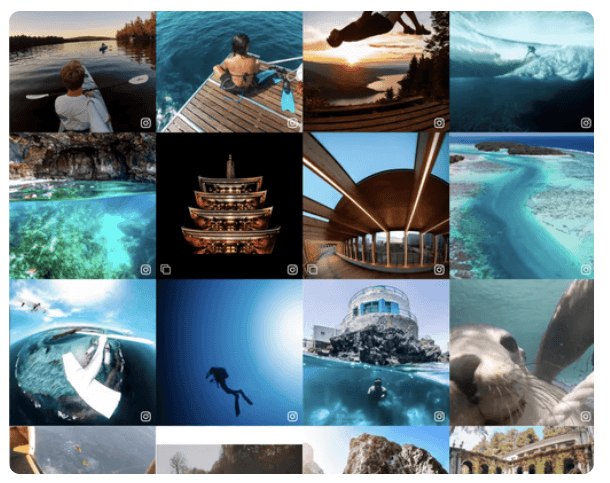
Best for ecommerce stores and portfolios, the Grid template uses clean square formatting to create a polished, organized look. It works especially well for product photos, branded imagery, and Instagram-heavy feeds. Great for businesses that want a minimalist approach to social media feed customization.
2. Waterfall
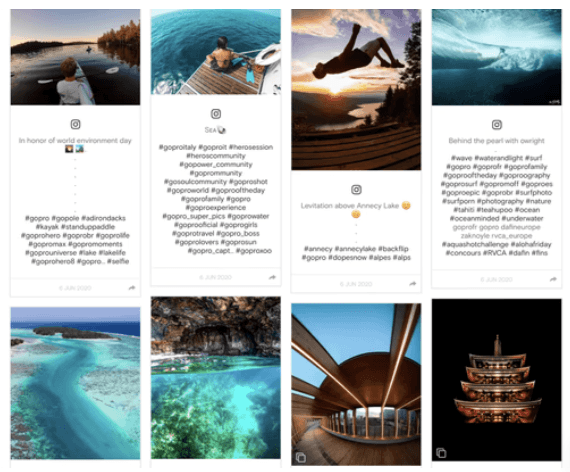
Waterfall displays both visuals and captions in an irregular flowing layout, making it ideal for storytelling, event coverage, tutorials, and creator brands. It’s one of the best choices if captions are important to your content strategy.
3. Carousel
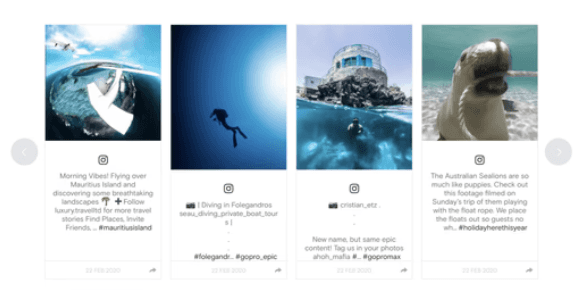
Carousel creates a simple horizontal scrolling feed that works well on homepages and landing pages. This layout keeps pages clean while still showcasing fresh social content.
4. Mosaic

Mosaic arranges posts into a visually dynamic collage. It’s ideal for travel brands, restaurants, photographers, and other visual-first businesses that want a more artistic social media feed design.
5. Panel

Designed for sidebars and smaller spaces, Panel keeps your feed compact without sacrificing engagement. It’s a smart option for blogs, footers, and narrow layouts.
6. Tetris
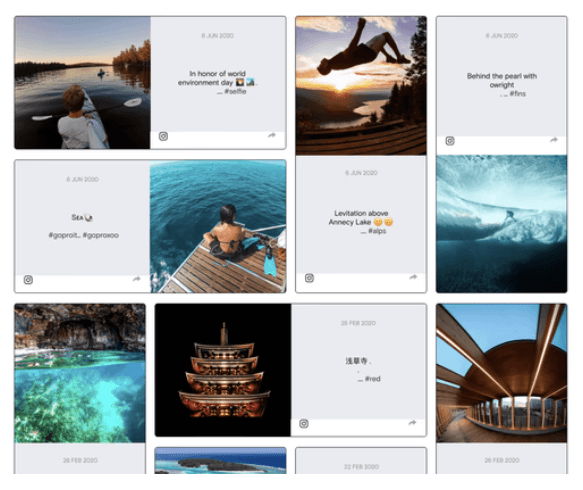
Inspired by the classic game layout, Tetris stacks posts into an eye-catching pattern that feels more playful and creative than traditional grids.
7. Cover Flow

Cover Flow highlights imagery in a sleek scrolling album inspired by Apple’s classic interface. It works especially well for image-heavy campaigns, portfolios, and premium brand aesthetics.
As you can see, just because you’re curating content doesn’t mean you can’t customize social media feed and make it look and feel like your own. And with Curator, you have complete control over the content you want to represent your brand.
Curator.io is an easy-to-customize aggregator that lets you pull from over a dozen sources. If you'd like to give Curator.io's free forever plan a spin sign up today.
Previous post: