Social media has become one of the most valuable channels for connecting with customers and building trust. Every minute, millions of posts, photos, videos, and comments are shared across platforms like Facebook, Instagram, TikTok, LinkedIn, and X.
As of April 2026, there were an estimated 5.79 billion social media users worldwide, with people spending an average of 2 hours and 21 minutes on social platforms each day. Those numbers highlight just how central social media has become to everyday life. For businesses, that creates both an opportunity and a challenge. Your audience is constantly creating and consuming content, making it harder for any single post to stand out. That's why simply publishing to social media is no longer enough.
A social media aggregator helps you bring your best content together in one place, making it easy to showcase fresh posts, user-generated content, and customer experiences on your website while extending the value of every piece of content you publish.
But what is a social media aggregator?
An aggregator is a tool such as Curator.io which enables you to automatically gather relevant posts from various social media platforms, and display them in a single feed.
You can use a social media aggregator for a variety of purposes. For instance, to embed social media networks to your website, and display real-time customer interactions. You can also use it during your events to:
Market your content
Showcase your brand
Increase visibility for your event and to keep your audience engaged.
Let’s now delve deeper and explore the specific benefits an aggregator can bring to your business.
Benefits of using a social media aggregator
Adding your social content to your site offers a ton of great benefits.
1. Saves time on content creation
Creating original content consistently is expensive and exhausting. A social media aggregator pulls content you've already published, plus user-generated content from your audience, and puts it to work across your website and marketing channels. One SaaS company I worked with cut their content production costs by repurposing tagged customer posts into their homepage feed instead of commissioning new photography every quarter.
2. Builds community and social proof at scale
When visitors see real people posting about your brand, it does something polished marketing copy never can. It shows proof. I've noticed that websites embedding live social feeds tend to generate more engagement than those with static content, simply because the feed feels alive. A boutique hotel using Curator told us that embedding their tagged Instagram posts on their booking page gave undecided guests the nudge they needed to convert.
3. Keeps your website content fresh automatically
Search engines and visitors both respond to websites that update regularly. An aggregated social feed refreshes your site every time you or your audience posts, without anyone touching the CMS. For teams without dedicated web managers, this is one of the most practical wins an aggregator delivers.
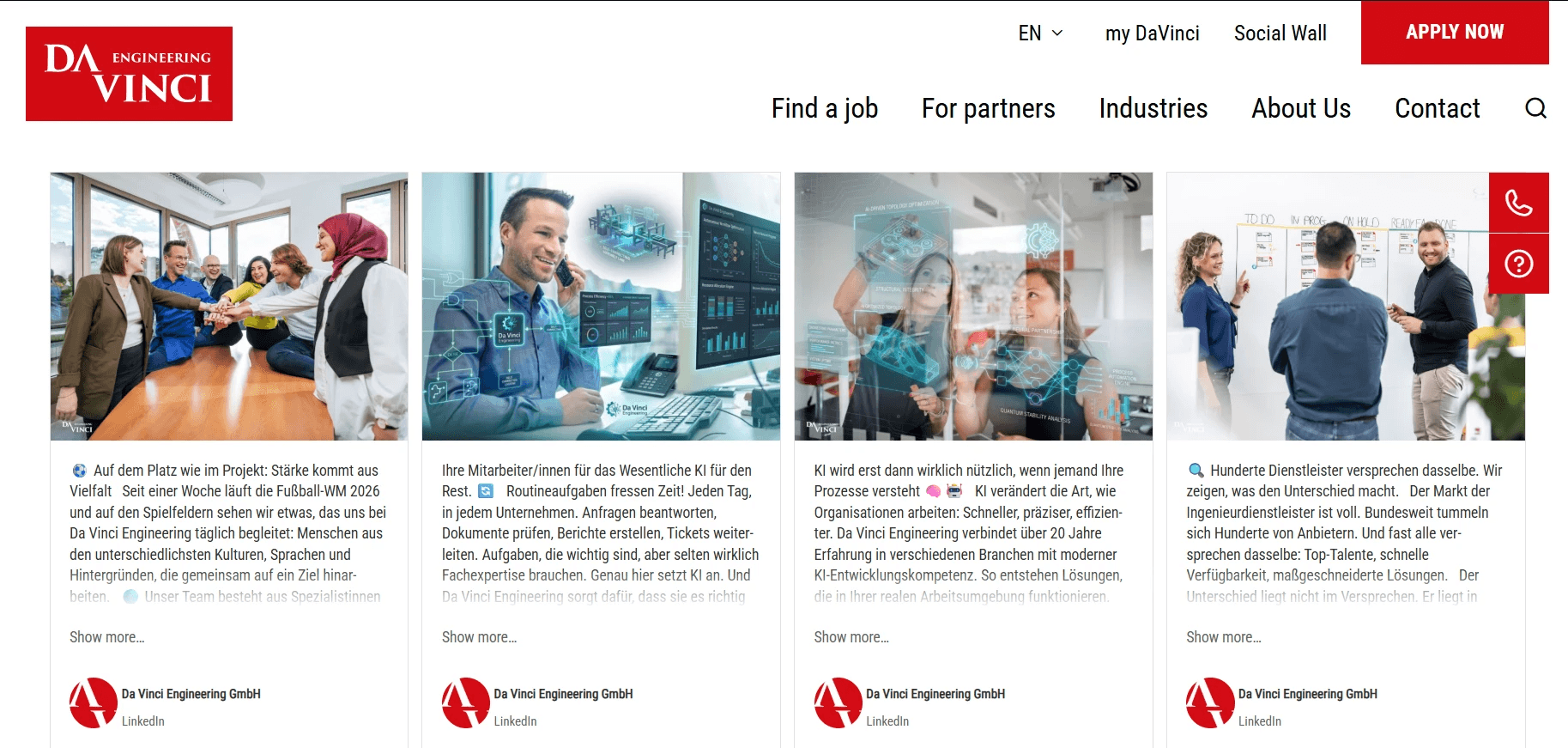
Da Vinci Engineering's social wall is an excellent example that showcases the benefits of a social media aggregator. It combines content from multiple social platforms into one branded hub, keeping the website fresh while highlighting company culture, events, and updates. This encourages visitors to engage with the brand beyond a single channel.
4. Surfaces user-generated content you can actually use
Your customers are already creating content about your brand. An aggregator helps you find it, moderate it, and showcase it in the right places. UGC consistently outperforms branded content in engagement and trust metrics. Aggregators make collecting and displaying it a system rather than a manual search.
5. Consolidates your social presence in one place
Most brands are active on three to five platforms. An aggregator brings those feeds together so your website reflects your full social presence, not just one channel. It also makes it easier for your team to monitor mentions, respond faster, and avoid missing posts that need attention.
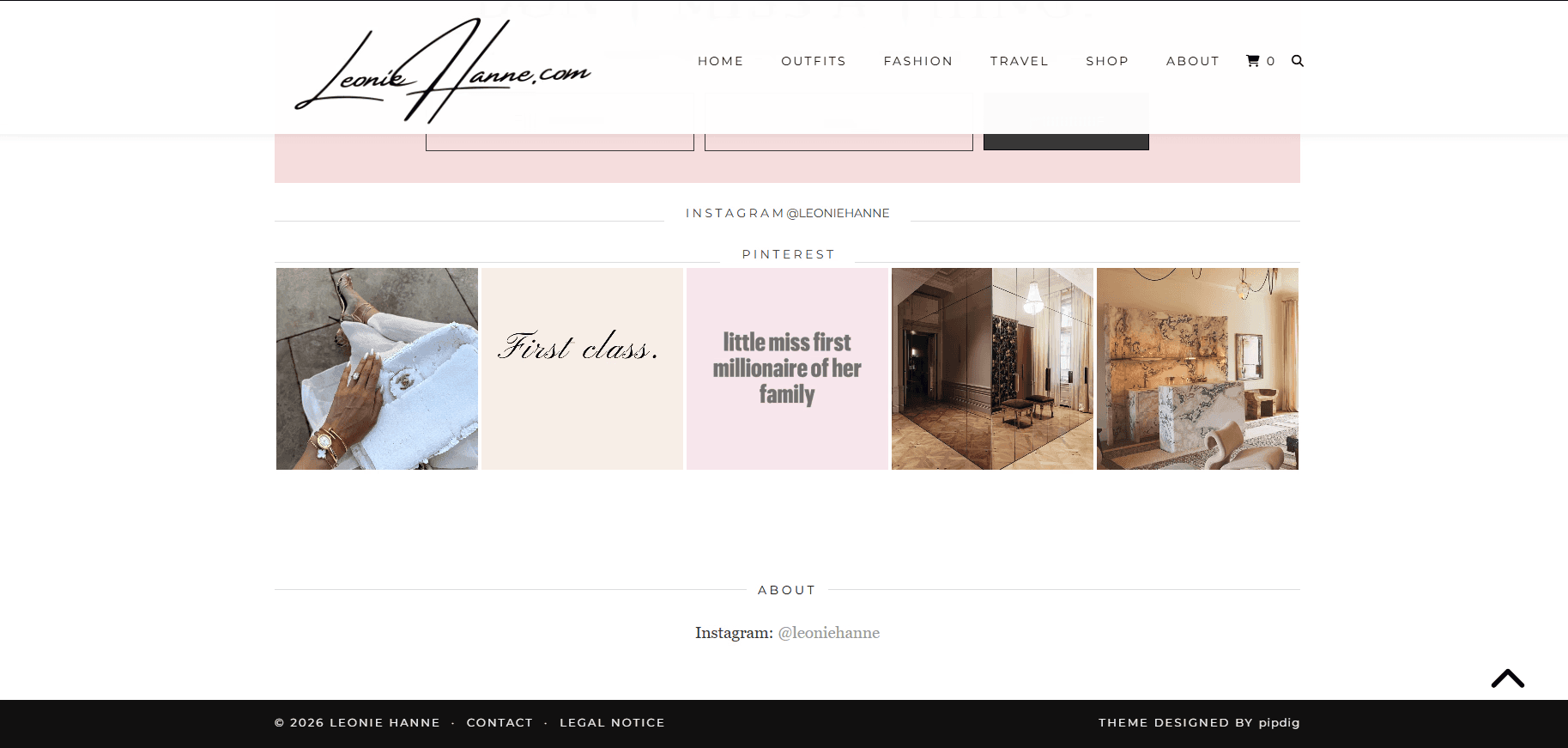
Fashion creator Leonie Hanne embeds a Pinterest feed that complements her editorial content. Visitors can browse outfit inspiration, travel ideas, and seasonal collections without leaving the website, creating a seamless experience across her content and social channels.
6. Supports SEO through fresh, indexed content
Another social media aggregator benefit is that regularly updated pages tend to rank better. Social feeds embedded on your site add new content signals for search engines without requiring additional writing. Customer reviews and tagged posts also contribute keyword variation that your own copy might not cover naturally.
7. Get more value from every social post
Creating high-quality social content takes time. A social media aggregator helps you extend the life of every post by displaying it on your website, digital signage, event displays, or landing pages. Instead of relying on a single burst of engagement, your content continues working long after it has been published.
8. Create more relevant customer experiences
One of the biggest advantages of modern aggregators is the ability to create multiple curated feeds. With one ecommerce customer, we learned that manual moderation worked best because they created separate feeds for different product lines and embedded them on the relevant product pages. Visitors saw content directly related to the products they were viewing, making the shopping experience far more engaging.

Baby Organic Clothes uses an Instagram feed to extend the shopping experience with lifestyle imagery featuring its products. The embedded feed reinforces the brand's identity, adds fresh content to the website, and helps parents see the products in everyday settings.
9. Gives you a real-time read on your audience
The content your customers create and engage with tells you what resonates. Aggregators surface that signal clearly. I often use those insights to decide which content deserves a more permanent place on a website. One SaaS customer discovered that UGC photos consistently outperformed studio images, so they redesigned several product pages to feature curated customer content first.
How brands use Curator to embed social feeds on their websites
Brands get the best results from social media aggregators when they treat them as part of the website experience, not just another widget. Rather than embedding the same feed on every page, successful businesses curate content for specific audiences and place it where it adds the most value. Product pages can feature customer photos, event pages can showcase live updates, and homepages can highlight recent brand activity.
At Curator, we've found that thoughtful curation makes a bigger difference than simply displaying more content. After experimenting with different layouts, moderation strategies, and feed placements across thousands of websites, I've found that showing fewer, high-quality posts that directly support the page's purpose consistently creates a better experience. A carefully moderated feed builds trust, keeps your website looking professional, and encourages visitors to continue exploring instead of leaving for social media.
Another effective strategy is creating multiple feeds for different campaigns, products, or departments. For example, an ecommerce store might have separate Instagram feeds for each product category, while a university could display campus life on its homepage and alumni content on its fundraising pages. This keeps every feed relevant to the audience viewing it.
Add a social media feed to your website with Curator. Our aggregator offers free and affordable plans.
Previous post: