You are already curating. The customer photo you reshared last week. The article you dropped in on a slow Tuesday. The review someone screenshotted for the homepage.
So why does none of it seem to land?
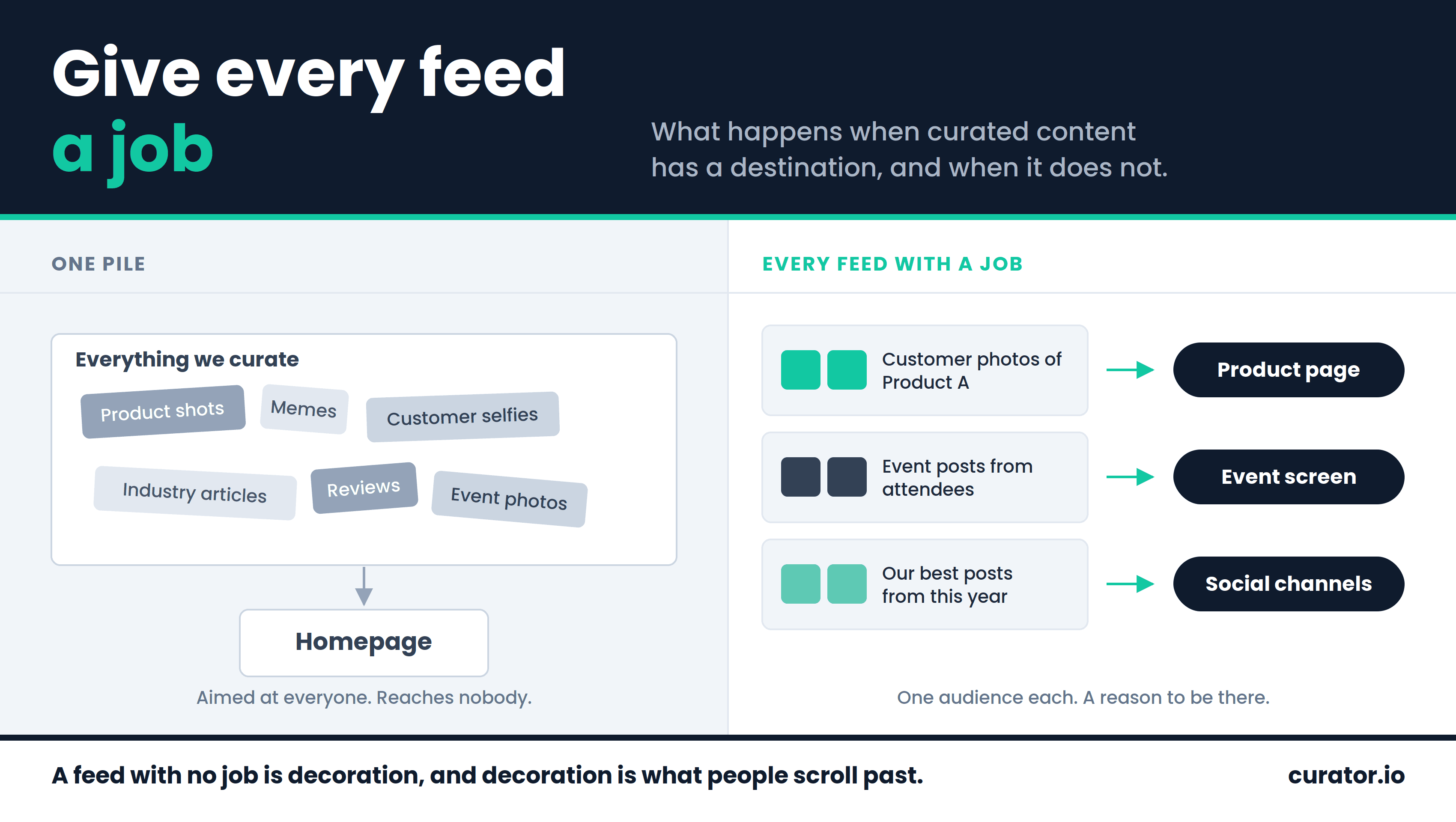
Look at where it went. The customer photo went to the same feed as the article, which went to the same homepage grid. One destination, doing every job at once.
The usual answer is that you need more content. Most teams I talk to are curating plenty. The problem is that all of it lands in the same place, so none of it is doing a specific job for a specific audience.
Curated social media works when every feed has a job. This guide covers the three decisions that get you there: what is worth curating, how to approve it, and where each piece belongs.
Curator.io is an easy-to-customize aggregator that lets you pull from over a dozen sources. If you'd like to give Curator.io's free forever plan a spin sign up today.
What is a curated social media feed?
Curated content is content you gather rather than create. You select it, and you show it to an audience for a reason.
That covers more ground than you expect. Your own posts from last quarter become curated content the moment you pull them out of order. So is the photo a customer took of your product.
The second half is where it goes. Curated content can live on your social channels. It can also live on a surface you control, like your website or an event screen. An aggregator tool handles the second kind.
Why most curated content goes nowhere
Ask a marketer where their curated content lives and you usually get one answer. The feed. Or the homepage. Or the queue.
That is the whole problem. Curation gets treated as a collection exercise, so the goal becomes volume. More sources, more posts, a fuller calendar. What you end up with is one pile holding everything, pointed at everyone.
Content aimed at everyone reaches nobody. A feed with no defined job is decoration, and decoration is what people scroll past.
You can test this in about ten seconds. Open your site and find the feed. Ask who it is for and what you want them to do next. If you cannot answer, neither can a visitor.
The fix is not complicated. Every feed, queue, or wall gets one audience and one purpose you can state in a sentence. If you cannot name the job, you are not ready to build it.
What is actually worth curating
Curated content comes from three pools. You probably think about one.
Your own posts, scattered across platforms
Your back catalogue is the pool nobody counts. You made the content. You already know it performed. Nobody who followed you in the last six months has seen it.
Pulling your best posts back into circulation is curation, and the cheapest kind. There is nothing to review, because you wrote it. That matters when you set approvals later.
Start here if you are curating for the first time. For more ideas, see our social media content ideas.
Content your customers make about you
This pool has the best returns. A customer's photo proves somebody bought your product.
The Royal Academy ran #LifeDrawingLive to collect that from attendees.

"Ask what job this feed is doing before you build it. If the answer is that it fills space, you have not got a feed, you have got decoration, and decoration is the first thing people scroll past." — Mike Hill, CEO and Co-founder, Curator
88% of consumers say trusting a brand is an important or critical purchase criterion (Edelman Trust Barometer, 2026).
Feature one photo and you get three more. Prompt it with a UGC contest, or compare UGC platforms.
Other people's content worth passing on
Here is the pool everyone means when they say curation. Articles, other brands' posts, industry commentary.
It is also the pool with the highest review cost and the least direct return. Nobody buys from you because you shared a good link.
What it does buy is relationships. Creators notice who shares their work and credits them properly. That is how partnerships start. Credit visibly, every time. Never strip attribution to make a post look cleaner.
How to curate social media
Two decisions stand between you and a working feed. Neither one happens in the dashboard.
Decide where the content comes from
Your source determines everything downstream. In Curator you can pull by account, by hashtag, by mention, or by geolocation.
Map those to the three pools. Accounts get your back catalogue. Hashtags and mentions get customer content.
Pick your source with review workload in mind. Your own accounts need almost none. A hashtag needs a lot, because anyone can use it. Our guide to adding a new source walks through setup.
Name a feed after its job, not its platform. "Product page UGC" beats "Instagram" in six months.
Choose automatic or manual approval
Every feed has a default post status.
Approved: All posts that your source will automatically be added to your website via feed. And when needed, you can manually delete any content you don't want to show.
Needs approval: You're in charge of what gets shared on your account. You manually decide what post is added to your website before it's shared.
The rule is simple. Automatic approval is right when the content is yours. Manual is right the moment it is not.
Manual does not mean slow. Curator's moderation rules run on every plan, auto rejecting duplicates, profanity, keywords, and specific users. See the features page and our moderation guide.
"The teams that get burned are the ones who set a hashtag source to auto approve and then stop looking at it. A feed is not a set and forget object. It is a live connection to a platform you do not control." — Thomas Garrood, Co-founder, Engineering, Curator
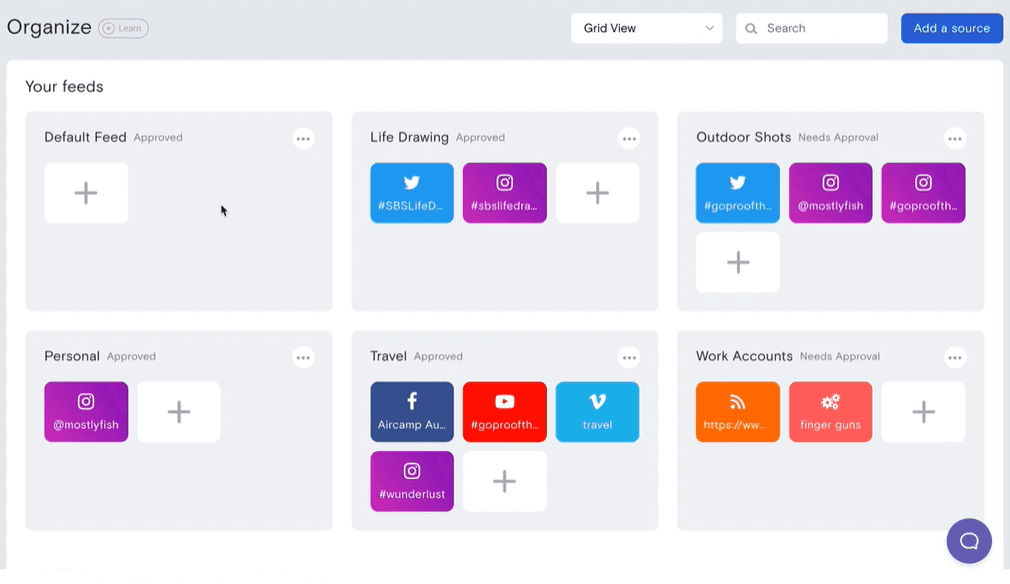
For setup, follow our tutorial on how to curate your social media.
Where curated content should live
A feed gets its job from its destination. Pick the destination first, then build the feed to suit it.
On your own social channels
This is the version the rest of the internet writes about. Curated posts fill calendar gaps, add variety, and bring in perspectives you cannot produce yourself.
If all you want is to drop other people's articles into your posting calendar, a scheduler like Buffer or Hootsuite serves you better. Curator earns its place when the curated content needs to live somewhere you control, on your site or on a screen.
On your website, next to what it proves
A curated feed puts new content on a page nobody has updated in a year. The page changes anyway. Because Curator embeds with JavaScript rather than an iframe, that content can be crawled.
Put a feed next to the thing it proves. Customer photos belong on product pages.
One ecommerce team came to us pulling every hashtag post into a single homepage feed. It looked busy and converted poorly. We split it into feeds per product line and moved each onto the matching product page. Approval stayed manual, and the feeds earned their space.
On a screen at your event
An event wall is curation under the hardest conditions. Content arrives in bursts, your audience is standing in the room, and there is no undo.
This is where manual approval stops being a preference. Anything on that screen is in front of everyone at once. See our guide to building a social media wall, or the events page for how it works on the day.
Three curated feeds worth copying
Each of these feeds has one job you can name in a sentence.
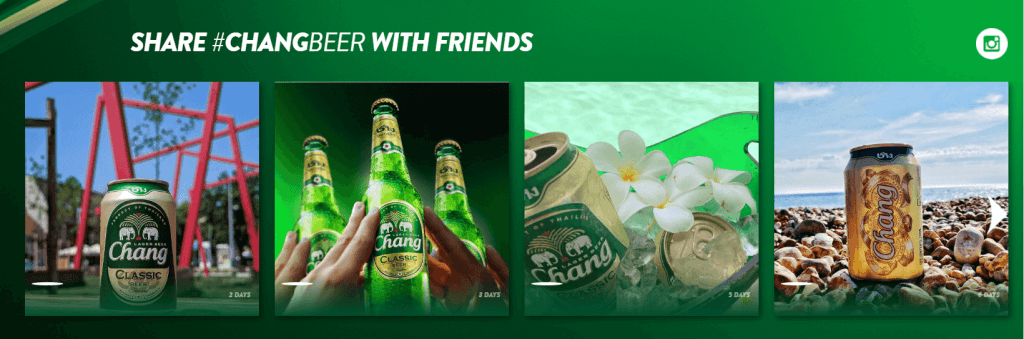
Change Beer curates customer posts showing where its beer turns up. The job is reach, proved by customers rather than claimed.
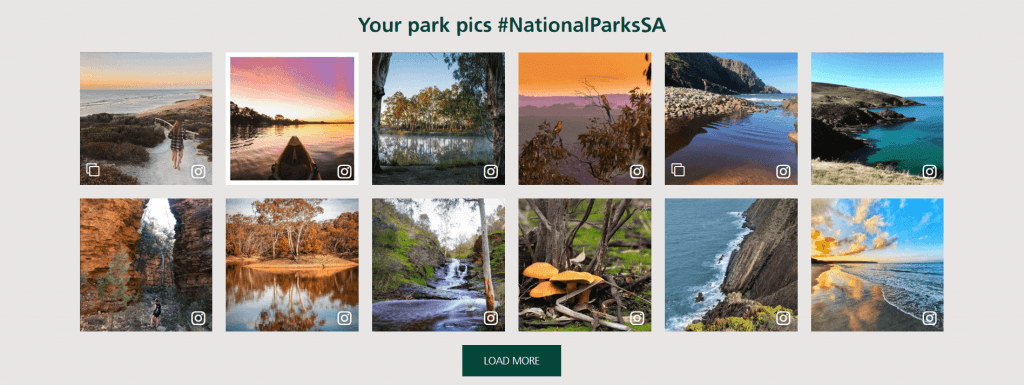
National Parks and Wildlife Service South Australia lets visitors share park photos through #NationalParksSA. The job is showing what a visit actually looks like to a stranger.
Grow it Local pulls member content about locally grown food. The job is community proof, and members supply it for the visibility.
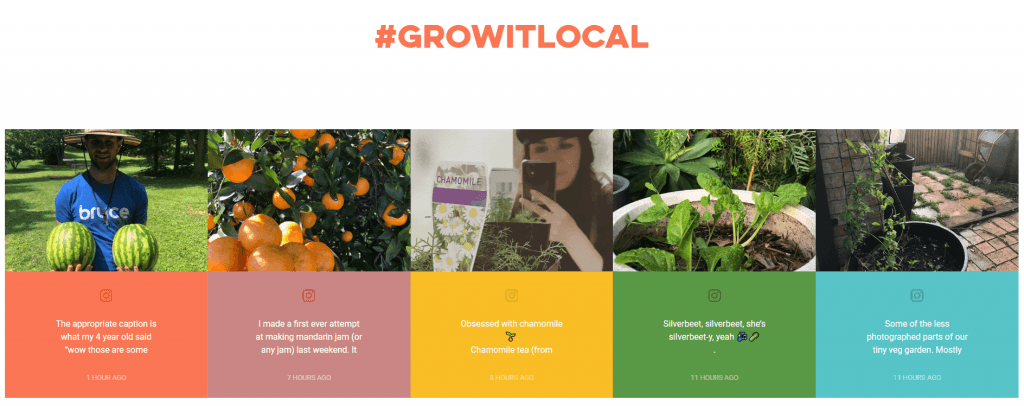
My favorite examples are the ones where you can tell what the feed is for within about two seconds. A university feed showing campus life is doing a job that a homepage grid of product shots never will.
Conclusion and next step
Curation is a targeting decision, not a collection one. Decide the job before you build the feed.
Pick one pool, one source, one destination. Set approvals to match. Then look at it every week.
If you are starting from nothing, start with your own posts. Point them at one page that needs the life. You will learn more from one feed doing a real job than five filling space.
If your use case is an event rather than a website, start at our events page.
Curator.io is an easy-to-customize aggregator that lets you pull from over a dozen sources. If you'd like to give Curator.io's free forever plan a spin sign up today.
Curated social media FAQs
Is curated social media the same as user generated content?
Not quite. User generated content is content your customers make about you. Curated social media is the wider practice of selecting content and showing it somewhere with a purpose. UGC is one of three pools you can curate from, alongside your own back catalogue and content from other people entirely. Most curated feeds pull from more than one.
How much of your content should be curated?
There is no correct ratio, whatever you read elsewhere. The answer depends on what each feed is for. A product page feed can be entirely customer content. Your social channels probably need mostly original posts, because that is where your voice gets built.
Do you need permission to repost someone else's content?
Yes, in most cases. A public post does not grant you a licence to use it in your marketing. Ask the creator directly and keep the reply. Curator offers a rights management browser extension that sends requests to Instagram users and tracks who responded.
How often should a curated feed update?
Match the refresh rate to how fast the content moves. A footer feed pulling your own posts can update daily without anyone noticing a lag. An event wall needs near real time updates, because the content is only relevant while people are in the room.
Previous post: