Birdeye is widely used by local businesses, franchises, and service providers to manage reviews, boost online visibility, and streamline customer engagement. While it’s a powerful all-in-one platform, some users find it expensive, feature-heavy, or not fully tailored to their needs. That’s why many businesses explore Birdeye competitors that offer more flexibility, affordability, or industry-specific solutions.
Why go for a Birdeye alternative
Birdeye is a solid tool, but it’s not always the perfect fit for every brand. Here are common reasons businesses look for alternatives:
Cost concerns: Its pricing can feel steep, especially for small businesses or startups. If you want something more affordable, several Birdeye competitors offer similar features at a lower price. You just have to find the one that fits your unique brand needs and goals.
Feature overload: Birdeye comes loaded with features and tools, including reviews, listings, social, messaging, and analytics. But not every business needs that much firepower. Sometimes all you want is a simple review tool or a streamlined social scheduler without paying for extras you’ll never use.
Learning curve: Because it offers so many features, Birdeye can take time to fully understand and implement. For busy business owners or lean teams, a simpler alternative can be a lifesaver.
Customer support needs: Some users report slower support responses. If you value quick, personalized help when issues arise, you might want a Birdeye competitor known for stronger one-on-one support.
Industry-specific tools: Birdeye covers a lot of ground and works for many types of businesses. But some alternatives are built just for certain industries like healthcare, hospitality, or legal services. These tools often include features that match the daily needs of those businesses. That means they can feel easier to use and more relevant right out of the box.
Types of Birdeye alternatives
Birdeye alternatives generally fall into several categories based on their main features. These categories include:
Review management platforms: These include tools that help collect, track, and respond to customer reviews across sites like Google, Yelp, and Facebook. They often automate review requests and provide a centralized dashboard..
Reputation and sentiment analysis tools: These are solutions for analyzing customer feedback and brand mentions to give insights into overall sentiment and perception. Some use AI-driven analysis for deeper reporting.
Local listings and directory management tools. These services ensure business details remain accurate across directories like Google Business Profile, Apple Maps, and Yelp. They often include bulk editing and syncing features.
Social media monitoring and engagement tools: Software that tracks conversations, mentions, and feedback on social platforms while integrating with review management for complete monitoring.
All-in-one customer experience platforms: Comprehensive solutions combining reviews, listings, sentiment analysis, and marketing automation.
What to look for in a Birdeye competitor
Choosing the right Birdeye alternative comes down to finding a platform that balances features, cost, and ease of use. Here are the key things to look for:
User-friendliness: The platform should be easy to set up and navigate, with a clean dashboard and customizable displays that match your brand’s style.
Core features: When comparing Birdeye competitors, choose one that manages review collection, ratings, and user-generated content. These features help showcase authentic customer voices and build trust in your business.
Flexibility and scalability: While Birdeye is built for multi-location businesses, not every alternative scales the same way. Look for a platform that can grow with you, whether you have one or multiple businesses. It should also support multiple locations, languages, or currencies without adding unnecessary costs.
Pricing: Transparent pricing, flexible plans, and no long-term commitments make it easier to grow confidently.
Customer support: Reliable, responsive support is crucial. A good Birdeye competitor should offer fast help through chat, email, or phone so you’re not left stuck when issues arise.
Reputation: Choose a competitor that’s highly rated by businesses like yours. Strong reviews and testimonials show the platform delivers on its promises, from reliable performance to ease of use, giving you confidence in your investment.
The 10 best Birdeye alternatives
Check out out the top Birdeye competitors for every possible use case.
1. WiserReview
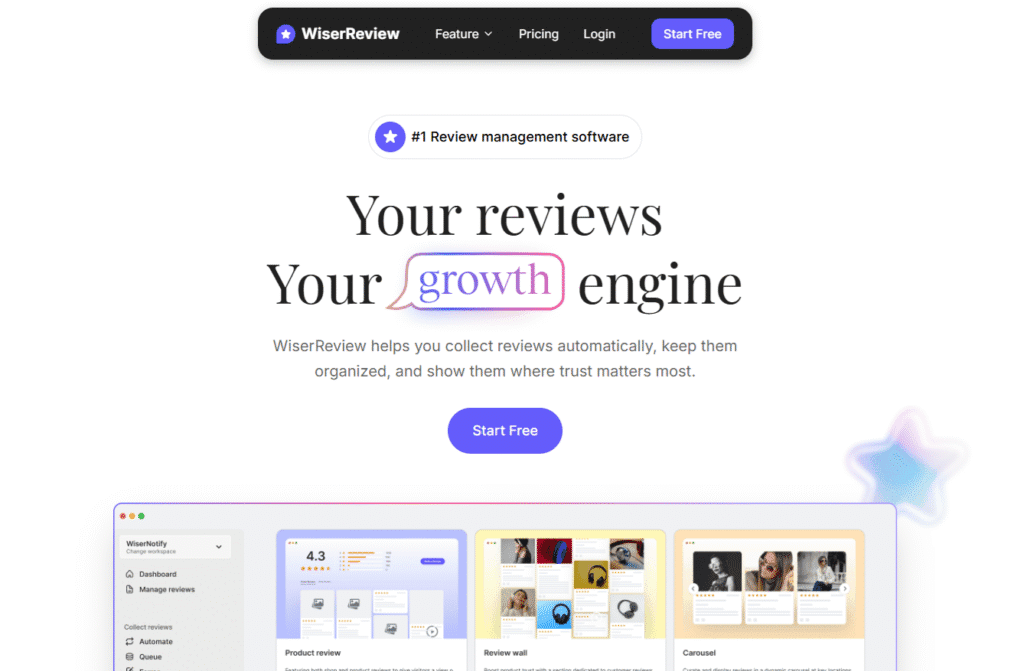
WiserReview is a review management platform that helps businesses collect, manage, and showcase customer reviews in one place. It automates review requests (via email, SMS, or links), filters and moderates submissions, and lets you embed widgets or badges on websites to display reviews.
What makes it a noteworthy Birdeye competitor is its simplicity, automation, and focus on turning reviews into marketing assets. Unlike more complex platforms, WiserReview emphasizes clean dashboards, on-brand displays, and integration ease (e.g. with Shopify, WhatsApp, Zapier) to make review management more accessible.
Core features
Automated review requests via email, SMS, or shareable links
Centralized dashboard for managing and moderating reviews
Customizable review widgets and badges for websites
Integration with Shopify, WhatsApp, and Zapier
Real-time notifications for new customer feedback
Pros and cons
WiserReview stands out as a Birdeye competitor for its affordability, quick setup, and visually flexible review displays. However, it lacks Birdeye’s advanced analytics, messaging tools, and customer experience features. Unlike Curator, it focuses solely on reviews, not social content aggregation, making it better for small to mid-sized businesses.
Pricing
WiserReview offers a free plan and paid tiers from $9 per month, adding unlimited reviews, AI tools, integrations, and advanced customization.
Ratings
5.0 stars on G2
2. Curator
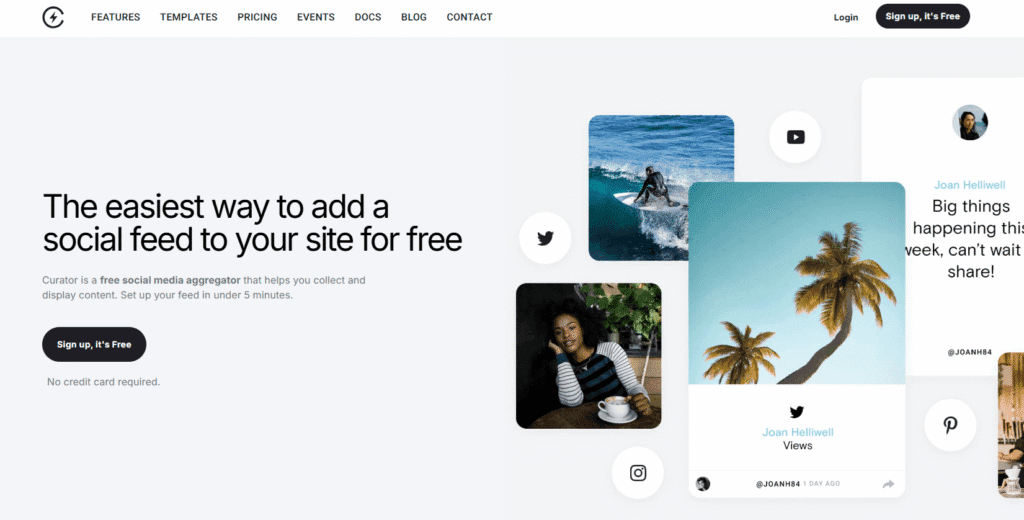
While Birdeye focuses on managing reviews, customer feedback, and online reputation, Curator shines in how it helps brands showcase real customer voices. Instead of just collecting reviews, Curator pulls user-generated content, like social posts, photos, and videos, into beautiful, customizable displays for websites or events.
It’s simpler, lighter, and more visual than Birdeye, making it ideal for brands that thrive on social engagement and authenticity. Curator doesn’t try to do everything. Instead, it focuses on making your customers’ content work for you. If your goal is to boost engagement and trust through genuine social proof, Curator often feels more creative and effortless.
Core features
Content aggregation from major social networks
User-generated content for websites and events
Customizable templates for social feeds
Easy setup in minutes without coding
Affordable pricing with fully featured plans
Pros and cons
As a Birdeye competitor, Curator stands out for its simplicity and focus on showcasing user-generated content through social media feeds. It’s affordable, easy to use, and visually engaging. However, unlike Birdeye, it lacks advanced review management, analytics, and customer messaging tools, making it better suited for marketing than reputation management.
Pricing
Curator.io offers a free plan with basic features, while paid plans start at $25 per month for professionals, $59 for businesses, and $200 for events. Enterprise and white-label solutions are available with custom pricing.
Ratings
4.6 stars on G2
3. Wisernotify
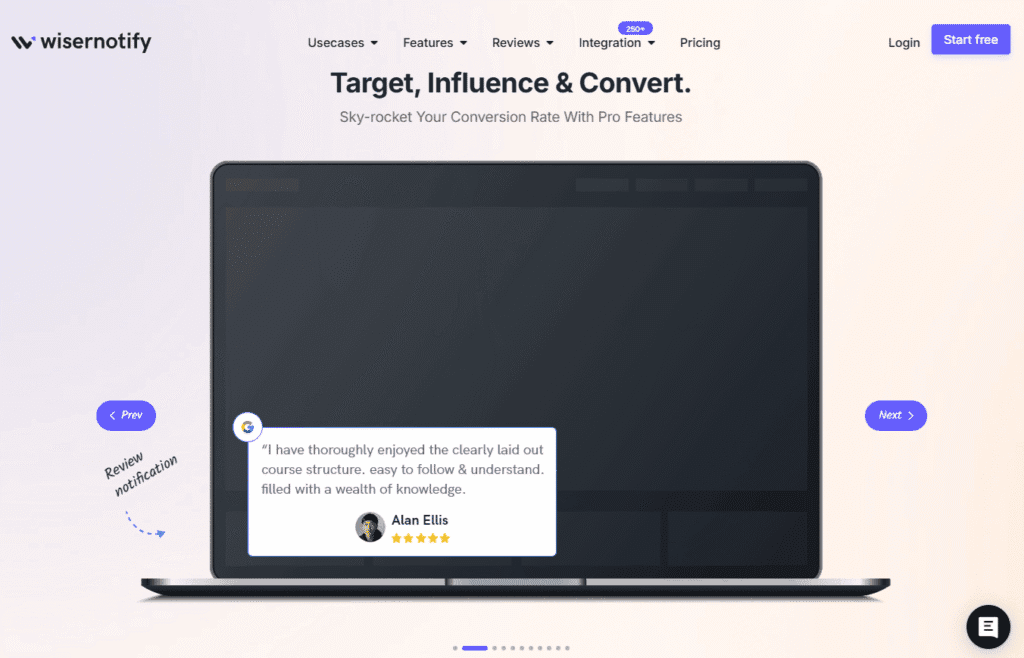
WiserNotify is a Birdeye alternative that focuses on real-time social proof rather than traditional review management. While Birdeye centralizes reviews, surveys, and messaging, WiserNotify boosts trust and urgency through live notifications showing recent purchases, signups, or reviews. It’s faster to set up and more affordable, making it ideal for eCommerce brands that want instant conversion impact.
Core features
Live notifications for sales, signups, and reviews
Social proof widgets to boost trust and urgency
Easy 1-minute setup with no coding required
Integrations with Shopify, WordPress, Wix, and more
Customizable notification designs and display rules
Real-time visitor counters and activity tracking
Conversion analytics to measure engagement impact
Pros and cons
WiserNotify offers fast setup, simple pricing, and impressive tools for boosting conversions through social proof and FOMO marketing. However, it lacks Birdeye’s in-depth review management, messaging, and survey capabilities, making it more suited for eCommerce and marketers focused on trust-building rather than full reputation management.
Pricing
WiserNotify pricing starts at $59/year for the Basic plan, $16/month for Pro, and $65/month for Growth. All plans include unlimited notifications, social proof widgets, integrations, and a 7-day free trial.
Ratings
4.8 stars on G2
4.9 stars on Capterra
4. NiceJob
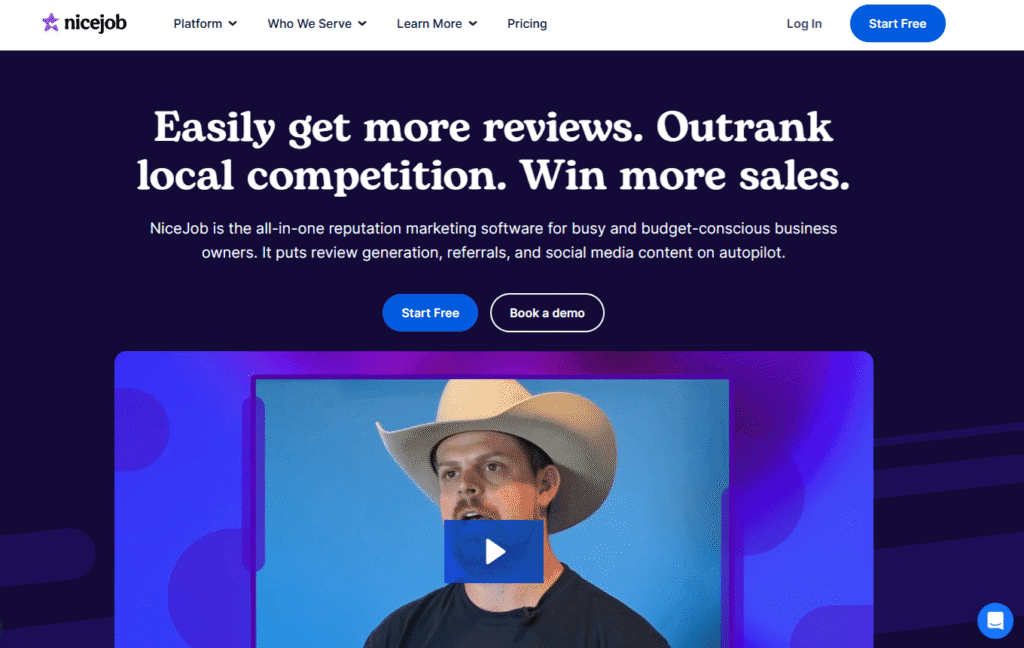
NiceJob is a reputation marketing platform designed for small businesses that want results without the hassle. Compared to Birdeye, it focuses more on automating review generation, referrals, and social sharing. This can help your business get up to 4x more reviews with minimal effort.
Core features
Automated review generation and sharing across Google, Facebook, and more
Referral tools to turn happy customers into new leads
Social proof widgets to showcase recent reviews and boost trust
Customizable websites optimized for conversions
Insights and analytics to track growth and performance
Easy setup with affordable, transparent pricing
Pros and cons
NiceJob is easier to use, faster to set up, and more budget-friendly than Birdeye, making it ideal for local service providers who don’t want multiple complex tools. It automates reviews and referrals effectively, but lacks advanced SEO tools, multi-location management, and deeper customization options that Birdeye offers for larger enterprises.
Pricing
NiceJob offers simple, contract-free pricing with a 14-day free trial. The Reviews plan costs $75/month, while the Pro plan is $125/month. Website bundles start at $99/month plus a $199 setup fee.
Ratings
4.8 stars on G2
4.9 stars on Capterra
5. ReviewTrackers
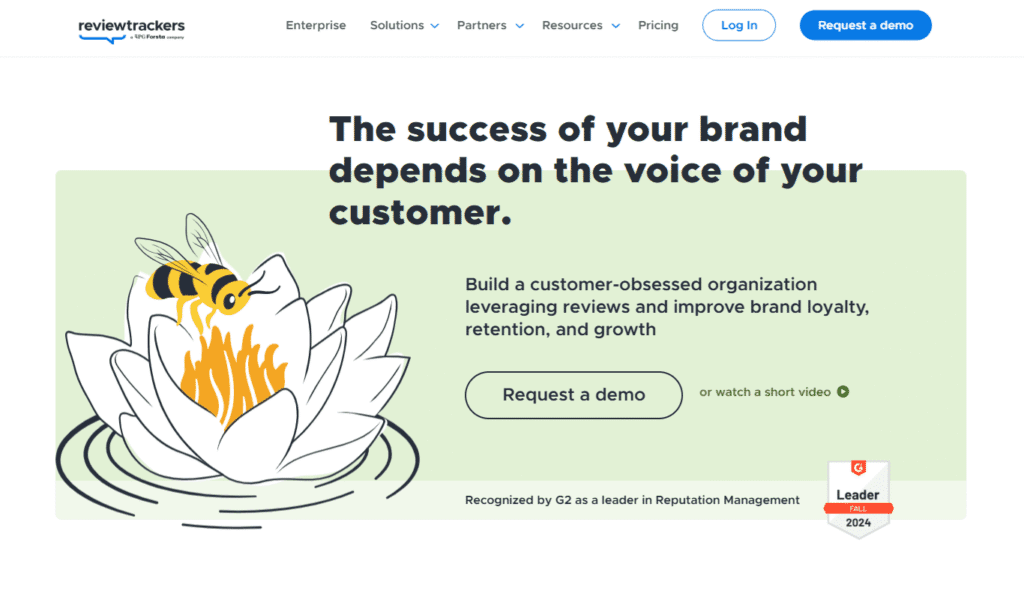
If you want a Birdeye competitor that focuses on data-driven insights, try ReviewTrackers. It helps brands track reviews across platforms, analyze customer sentiment, and boost online visibility.
ReviewTrackers also excels at managing listings across platforms. With tools for customer experience analytics, competitor tracking, and SEO optimization, it’s ideal for businesses that value growth and strong reputation management through actionable feedback.
Core features
Review monitoring across multiple platforms
Customer sentiment analysis for actionable insights
Local SEO tools to boost online visibility
Competitor performance tracking and benchmarking
Customer experience analytics to improve satisfaction
Centralized dashboard for managing feedback and listings
Automated review collection and alerts
Pros and cons
ReviewTrackers centralizes reviews across multiple platforms, saving time and improving response management. Users love its simplicity, analytics, and support. However, notifications can be inconsistent, not all review sources are tracked, and the interface can feel overwhelming initially. Still, it’s great for sentiment tracking and boosting local SEO visibility.
Pricing
ReviewTrackers uses location-based pricing, offering Starter and Essential plans. Each includes unlimited users, with optional add-ons like local listings, competitor insights, and managed services for scalable reputation management.
Ratings
4.6 stars on G2
4.7 stars on Capterra
6. Podium
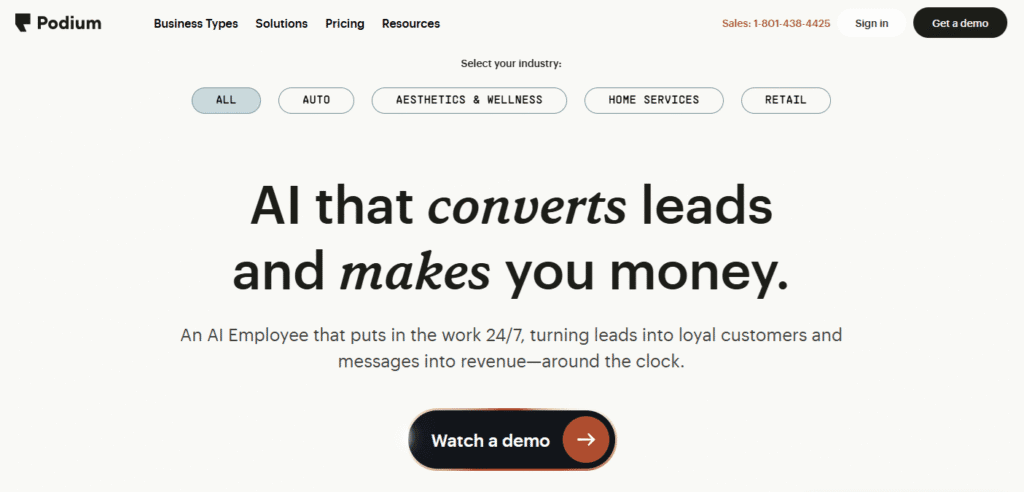
Podium stands out from Birdeye by focusing on AI-driven lead conversion and customer engagement. While Birdeye centralizes reviews, surveys, and messaging, Podium’s AI actively responds to leads in under a minute, books appointments, and follows up automatically. It’s designed for speed, personalization, and real-time sales growth, not just reputation management.
Core features
AI-powered lead conversion and follow-ups
Centralized inbox for calls, texts, chats, and reviews
Automated review requests and responses
Real-time customer engagement
Industry-specific AI customization
Pros and cons
Podium excels at streamlining communication through texts, reviews, and payments in one place, helping businesses respond faster and improve customer satisfaction. However, users report issues like technical glitches, confusing message organization, and strict cancellation policies. While feature-rich and AI-driven, it can be pricey and less flexible for small businesses.
Pricing
Podium doesn’t list prices on its website, but you can contact them for a custom quote.
Ratings
4.6 stars on G2
4.3 stars on Capterra
7. BrightLocal
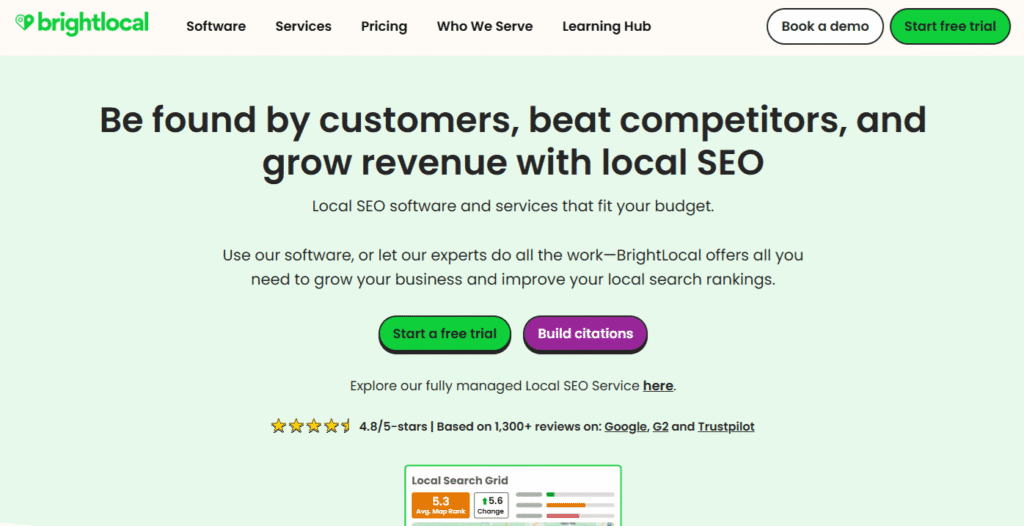
If you want a Birdeye alternative built for local SEO, BrightLocal should be on your radar. It’s more affordable, easier to use, and focuses on helping businesses rank higher locally. Unlike Birdeye’s all-in-one approach, BrightLocal specializes in citations, listings, and reputation management, offering data-rich insights, flexible pricing, and expert-managed SEO services tailored for small businesses and agencies.
Core features
Local rank tracking for specific keywords and regions
Google Business Profile optimization tools
Citation tracking and management across hundreds of directories
Review collection, monitoring, and response tools
White-label reporting with shareable URLs
Managed local SEO services for hands-free optimization
Pros and cons
Ease of use, responsive support, and accurate citation tracking make BrightLocal standout. It’s effective for local SEO, though slightly pricey for small businesses and occasionally buggy compared to more automated tools.
Pricing
BrightLocal’s pricing starts at $29/month for the Track plan, $36/month for Manage, and $44/month for Grow.
Ratings
4.6 stars on G2
4.8 stars on Capterra
8. Broadly
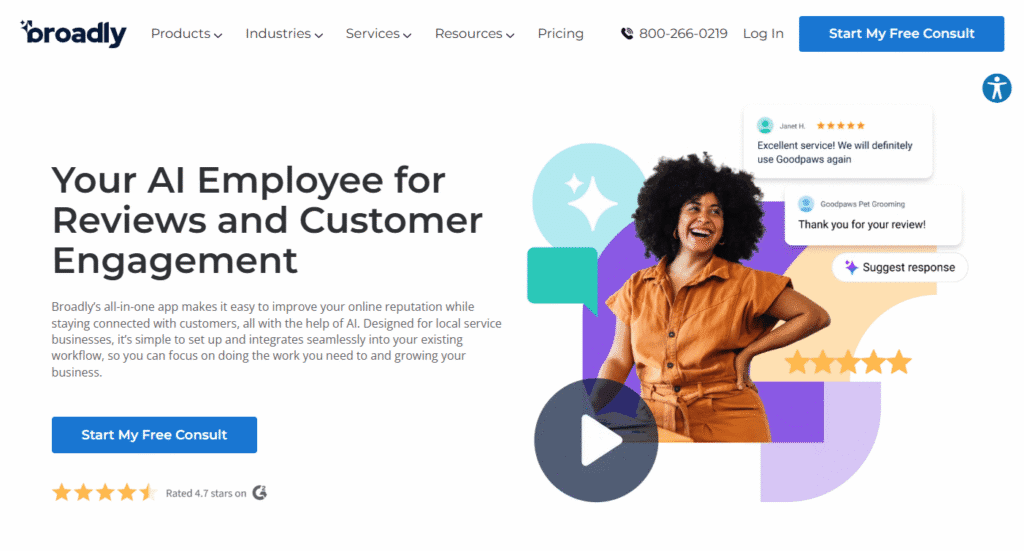
This all-in-one AI-powered platform helps local service businesses manage reviews, engage customers, and boost online visibility. With Broadly, brands can streamline communication and drive measurable growth through automated web chat, messaging, and reputation management tools.
Core features
AI-powered web chat for instant customer responses and lead capture
Automated review collection, monitoring, and AI-driven responses
Unified inbox for SMS, email, and social media messages
Local SEO insights with keyword and visibility tracking
Customer engagement tools for follow-ups and retention
Performance analytics to measure ROI and marketing impact
Pros and cons
Broadly earns praise for its ease of use, responsive customer support, and effective review automation tools that simplify client communication. However, users mention limited automation features, rigid contracts, and occasional value concerns, especially for small businesses seeking more flexibility or affordable alternatives.
Pricing
You can get it for $299/month with a $350 setup fee. Broadly’s plans go up to $699/month, offering AI receptionists, review management, SEO tools, and social media automation for growing businesses.
Ratings
4.7 stars on G2
4.8 stars on Capterra
9. Yext
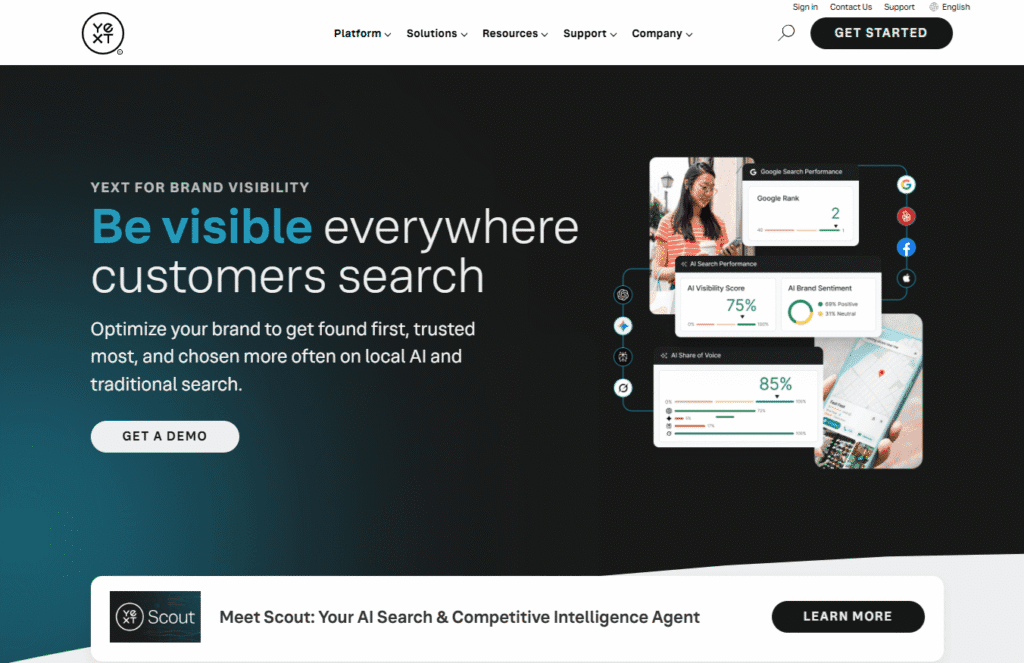
Yext helps businesses get found and trusted by customers everywhere they search. It keeps business information accurate across listings, reviews, and local pages. The platform gives clear insights on competitors and local search performance. AI tools optimize content for visibility and customer engagement.
Yext also helps turn online discovery into real conversions. It centralizes brand management so updates are easy and consistent. Businesses save time, improve trust, and reach more customers without juggling multiple platforms.
Core features
Centralized business information management across all listings and directories
AI-optimized local pages for higher search visibility
Review monitoring, collection, and response tools
Localized social content creation and management
Competitive insights and benchmarking against local competitors
Pros and cons
Yext saves time, makes navigation easy, and provides useful analytics, making it a strong Birdeye competitor. On the downside, it can be pricey and sometimes a bit complex for smaller businesses with just a few locations.
Pricing
Yext’s website doesn’t mention specific prices, but you can get a custom quote by contacting its customer support.
Ratings
4.4 stars on G2
4.2 stars on Capterra
10. EmbedSocial
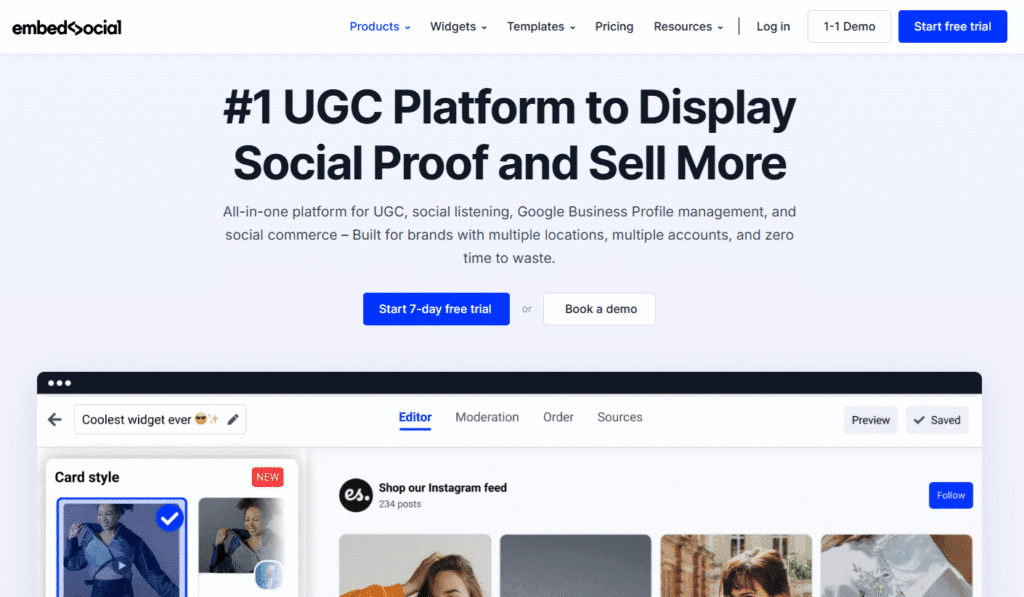
Brands use EmbedSocial to collect, manage, and display user-generated content (UGC) and reviews across multiple locations and platforms. It helps centralize Google Business Profiles, aggregate social media posts, monitor mentions, and showcase UGC with customizable widgets.
Companies use it to build social proof, engage customers, and automate review responses. It also tracks performance and can drive sales with shoppable content, making it ideal for multi-location brands and agencies.
Core features
Collect and display UGC from social media
Manage and respond to reviews across multiple platforms
Track Google Business Profile performance for multi-location brands
Embed shoppable content and interactive widgets on websites
Aggregate social mentions and monitor brand reputation in real time
Pros and cons
EmbedSocial works as a strong Birdeye alternative thanks to its excellent support, intuitive design, fast setup, and seamless UGC embedding. But there are some drawbacks, such as its higher cost, slight learning curve, and limited widget design options.
Pricing
Plans start at $29/month for single tools, or $53/month for bundles that include feeds, reviews, forms, and Google Business Profile management.
Ratings
4.9 stars on G2
Previous post: